Showing posts with label mozart. Show all posts

21 August 2025

Le nozze di Figaro at Glyndebourne Festival 2025

My final visit to Glyndebourne Festival 2025 was to see Le nozze di Figaro. I had seen it at Glyndebourne four times since 2016 and so it was not an automatic choice to see it again but it is a lovely opera and this was a new production so that was enough to tempt me.

I went for the usual price band and got seat Blue Upper Circle A8 for £145. Happy with that.

Again travel did not quite work to Plan A but Plan B was fine, too late in Lewes to visit The Depository for lunch so I tried the coffee shop by the station entrance and that did the job. Several other Glyndebourne goers had the same idea.

The rest of the new routine worked and the first coach was early enough to claim a seat in the Veg Patch Stretch Tent. The weather was good so many people had opted for the grass leaving space in the marquees.

Any doubts about seeing Le nozze di Figaro were lifted as soon as the overture started, the music really is lovely.

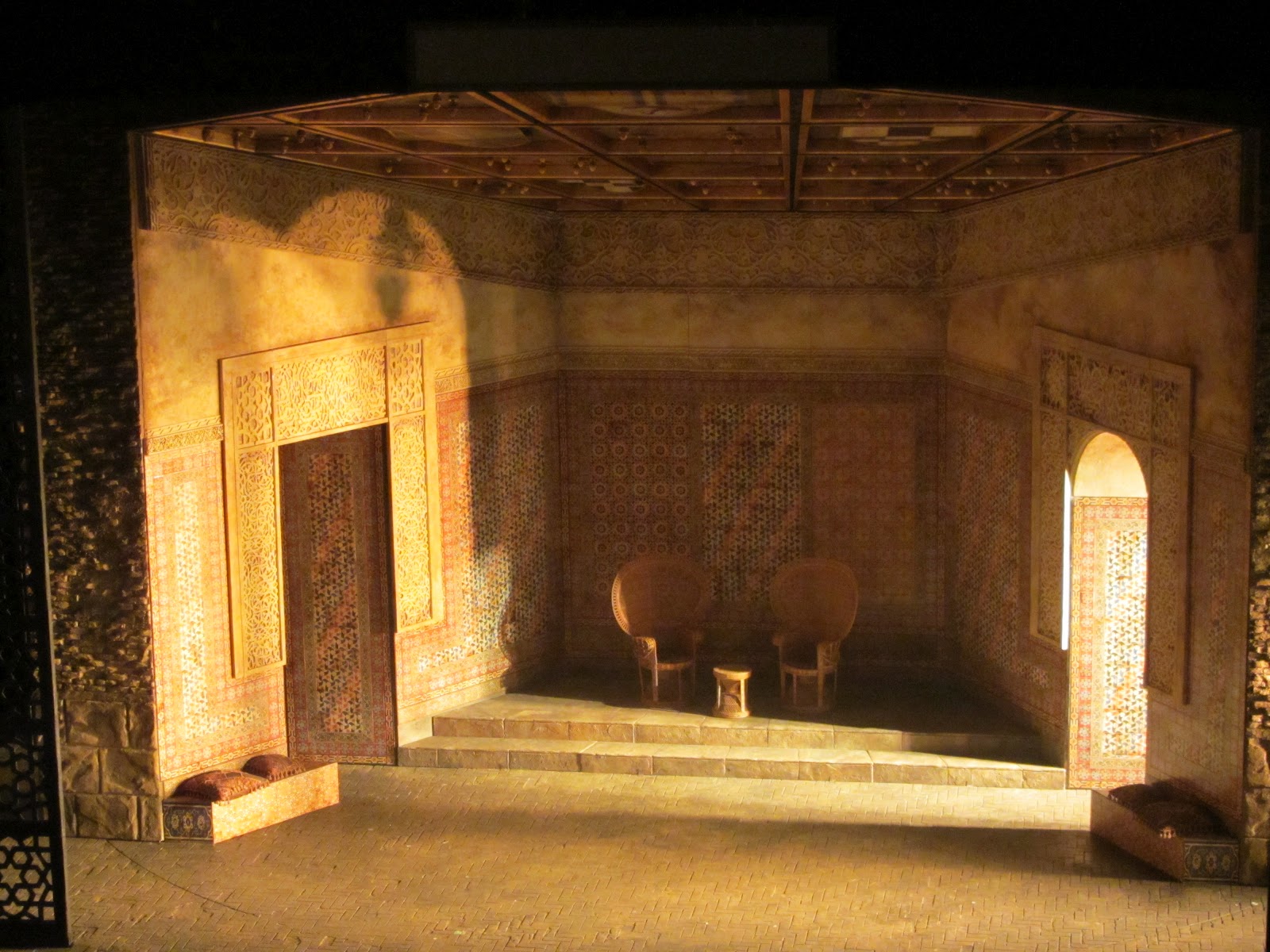
The set made an immediate good impression too. Superficially simple with little decoration it rotated along several arcs creating multiple spaces with nonchalance.

The production made great use of the set and its movement creating busy but not fussy scenes.

The actors built on this by playing the comedy to the full with exaggerated, but not false, gestures and movements.

The combination of the set and performers and, yes, the sur titles, made this complex story easy to follow.

If this was a play then it would have been excellent but, of course it is an opera so there is the singing to consider too and this was excellent too. This was the most that I have ever enjoyed  Le nozze di Figaro and in the likely event that Glyndebourne revives it in a few years then I will eagerly see it again.

29 May 2024

Die Zauberflöte at Glyndebourne Festival 2024

My first visit to Glyndebourne Festival 2024 was to see Die Zauberflöte. I had seen the opera a few times and was not desperate to see it again but friends of mine were so I did the booking and we got seats Blue Upper Circle B 7-10 for £105. The view was good and the seats were great value.
 
Going to Glyndebourne is now a routine of trains, coaches and a holding lunch at The Depot next to Lewes Station, and that all worked well.

There was some confusion on the coach as my son, Howard, had also booked a seat and not only did I not know that he was going, I did not know that he was in the country!

Our friends arrived at Glyndebourne in time for the official 3pm opening and were able to claim a seat in the Veg Patch stretch tent, our new favourite location.

My problems with Die Zauberflöte is the obscure plot and this production solved that with excellent staging that not only told the story well but also stressed the comedy making it easy to follow and very enjoyable.

The orchestra and the singers were as good as they always are at Glyndebourne with the singers often going above and beyond with their acting.

I am still not convinced that I want to see other productions of Die Zauberflöte though I will make an exception if this one comes back to Glyndebourne in the near future.

18 November 2016

The Magic Flute at Normansfield Theatre

The opera events at Normansfield Theatre have been good to me in the past so it was an easy decision to go and see The Magic Flute there.

I chose to go on a Friday as it was easy to walk there after work. I took a slight detour via the Tide End to get something to eat and their Asian Vegetable Burger came up trumps again.

The evening was sold out, all three evening were, and I did well to get a seat in the second row. A bargain at £15.

This was an amateur performance so I was not expecting that much and, to be honest, a few of the singers were a little off tune at times and/or lacked the strength of voice required to fill the room. The star of the show, Pamina, was either professional or professionally trained and her performance was sparkling. The Queen of the Night also had the power to suggest she had good credentials and while the male lead, Tamino, started a little weakly he grew into the role and his solo later on a highlight of the show.

The orchestra was also amateur but hid that well and their fine playing meant that the music easily carried the opera and made any weaknesses in the singing irrelevant.

There was an interval of course and that was an opportunity to give more money to charity, the Down’s Syndrome Association, by buying a glass of Prosecco. It was also an opportunity to say hello to some old faces, Richard who ran the chess club that the boys went to when at Primary School and Roger and Lucy who abandoned the beauty of North Kingston to live close to the A3 about twenty years ago.

After the performance I went to The Anglers for a final drink only to find it ridiculously shut at just after 11pm on a Friday. The Tide End was still open so I had a pint there instead. I prefer it there anyway.

This production of The Magic Flute was never going to compete with the likes of Glyndebourne but that was not the point. This was a very pleasant night out with some excellent music and some decent singing.

08 July 2015

Die Entführung aus dem Serail at Glyndebourne


Glyndebourne had a thing for lesser known Mozart operas and I did too after seeing Bastien and Bastienne at Grimeborn in 2012 and La finta giardiniera at Glyndebourne last year. Some friends that we had taken to Glyndebourne several times before were interested in seeing Die Entführung aus dem Serail too so we were the usual foursome.

We decided to go for cheap seats for this one knowing that we could hear the music clearly wherever we sat. The seats we got in the ballot were Blue Circle Box 15 and 16, that was four seats at a miserly £50 each. There were some drawbacks with the seats. The view of the stage was fine but the view of the supertitles was obstructed which meant that I had to wriggle in my seat a little to read all the text. A small price to pay for a small price.

Despite all of us being regular visitors to Glyndebourne we did the walk around the garden thing and enjoyed it immensely despite its familiarity.

We also enjoyed the other familiar habits like the tea and cake on arrival and, obviously, the sparkling wine with the main meal during the long interval. The opera at Glyndebourne is a great attraction but it is everything else that goes with it that makes it an event.

Die Entführung aus dem Serail translates to The Abduction from the Seraglio and concerns two women who had been abducted by by a Turk and the two men trying to get them back. In the way was the abductor and his burly servant. Despite the premise it was actually a comic opera and one with a heart too. The men's plots to get the women back were amateurish and easily foiled while the Turkish servant had problems with his wife in the kitchen.

The style of the opera was singspiel, or sing-play, which is to say that the narrative was spoken and punctuated with the songs. It's a perfectly valid form of opera and while that meant that it had less music than one that was fully sung it also meant that the plot was easier to follow. The songs were pretty enough, they were written by Mozart, and the whole thing was rather jolly.

The heart bit came at the end when the big bad Turk turned out not to be such a baddy after all and, even better, he made a point of behaving better than the Europeans had behaved to him. And they all lived happily ever after (apart from the servant).

After the opera there was time for a coffee and a chat while others queued to get out of the car park.

This day at Glyndebourne, like so many others, ran from about 3pm to 10pm, and was a wonderful day, like so many others.

21 August 2014

La finta giardiniera at Glyndebourne


My third visit to the Glyndebourne Festival in 2014 was to see an early Mozart opera, La finta giardiniera, which I had not heard of previously. It was not exactly my choice to see it, a friend wanted to go, but I was happy enough to see something by Mozart and so I applied for some tickets.

The day was warm and dry but windy so the marquee seemed the best option for picnicking. The weather meant that my first drink was a decidedly unbubbly cup of tea. I had some cake too before taking the customary walk around the gardens.

The bubbly did, of course, make an appearance before the opera started and a reappearance during the long interval.

I was up in the Blue Upper Circle in the second row from the very back (F23) where I had this fine view of the stage and, importantly, also of the surtitles. At £85 I thought that this was excellent value.

La finta giardiniera was a love story with a difference. The difference being that when we first meet the central couple he has just stabbed her and left her for dead. Not many relationships recover from something like that but this one did.

Oddly the stabbing was not the main obstacle to their ultimate reunion, that was the various other people who they were either engaged to or who were in love with them. The story was thick with unrequited love.

There were lots of moments of comedy too and in one riotous scene the arguing couple literally tore down the room that they were in. It helped that it was made of paper.

The plot was very light-operatic and the music was too. Mozart knew how to write a pretty tune and this had several. And this being Glyndebourne, the singers all did an excellent job with both the music and the acting.

La finta giardiniera never threatened the intellect or did very much emotionally but it never tried to either. It was perfectly happy being a light-operatic rom-com and I was perfectly happy to see it.

18 May 2014

Captivating version of The Magic Flute at Normansfield Theatre

I like the Normansfield Theatre in Teddington. The building is pretty, going there supports the Down's Syndrome Association, every show that I have been to there has been very good and I can walk there in around half an hour.

I was also looking forward to seeing The Magic Flute, amazingly that was a first! I had seen a concert performance at the Proms many years ago and another opera based on the writing of this one last year, and I had even read a graphic novel adaptation by P Craig Russell, but I had never seen this opera performed as an opera before.

It was a dry day and so I walked there and found a park in Teddington that I did not know about before. That's why walking is the best way to explore.

I got there just about in time for a drink but this was a Sunday matinee service and so was unlicensed. I gave the tea a miss.

The theatre was pretty full when I got there but as most people had timidly avoided the front-row I decided to sit there.  As is the tradition with the theatre these days, some of the cast came on stage before the performance started and so my usual picture of the stage-from-my-seat also captured a monk.

The music was recorded and the conductor sat to the right of the stage waiving to the singers and pressing buttons.

There was a large cast with a good range of voices all but one of which I could follow easily, obviously there were no surtitles here.

Despite my good previous experiences at the Normansfield I was pleasantly surprised by both the singing and the acting.

I was not expecting the show to be amateurish (in any sense of the word) but this was not Glyndebourne and I had reduced my expectations accordingly. That was a mistake as it was an excellent production that told the story very well and did the music justice with some fine singing.

Papageno led the way, as he should. He may be the light relief to the hero Tamino but it is songs that most people know. The light relief is also an important part of the opera and this production made me laugh in all the right places.

The other role that caught my eye was the baddie Monostatos who just oozed malevolence. There is also a worthy mention for the three ladies who, in a period production, wore fetching black outfits, one complete with guns in leg holsters.

The Magic Flute enthralled me throughout. This was an excellent production that showed how opera can be dramatic, comic and, above all, lyrical.

16 February 2014

Kiss me, Figaro! at Riverside Studios

Last year's production of The Magic Flute (a story around the opera, not the actual opera) by Merry Opera was enough to convince me to see their new show Kiss Me, Figaro! when it came to the Riverside Studios.

How right I was to do so.

Kiss Me, Figaro! uses the clever device of telling the story of a travelling opera company to include songs from their performances, songs from their rehearsals and songs they sung when being themselves. So, for example, we had a beautifully staged except from The Elixir of Love (everything was sung in English), an awkward rehearsal of Your Tiny Hand is Frozen (from La Boheme) and a raucous rendition of Irving Berlin's I'm Putting All My Eggs in One Basket.

Kiss Me, Figaro! calls itself a romcom, and that is fair. The amount of music, mostly but not all from operas, makes it a musical, of sorts. While it may be hard to classify it is easy to enjoy.

The romantic protagonists are the leading soprano (Daisy Brown) and tenor (Joe Morgan). These are also the actors real names which suggests the possibility of there being some truth in the story. They had been together and then he left her for another woman, just as she was having the final fitting for her wedding dress. He also left the company. An accident brings Joe back and having split from the other woman he is keen to get back with Daisy, but she does not want to so pretends that she is interested in the baritone George, played by James Harrison. Meanwhile one of the other singers has her eyes on Joe.

There are some other things going on with the cast and the company, including the comedic high-point just after the interval when they experiment (briefly) with a new thematic style which involved them singing Three Little Maids from School are We, from The Mikado, in outrageous costumes. That scene alone is worth going to see the show for.

There is just so much to like, and nothing to hate, about the production.

The large cast, eleven I think, all sang beautifully. I am used to shows like this having a few good voices and a few weaker ones but I think that this is the best overall singing that I have heard.

The two leads were magnificent and I'll also single out (possibly unfairly) James Harrison and that is partially because I saw him play the completely different role of a member of the Stasi in Tosca last year and he was very good in that too.

The acting was excellent too and everybody was always busy doing something. I'll highlight soprano Jenny Stafford, Daisy's understudy in the company, here for the faces she pulled behind Daisy's back and the way that she reacted to Joe's return by opening her blouse more at the top and leaning back seductively. This was echoed later in the performance from The Elixir of Love where Daisy was brilliantly over the top in trying to attract Nemorino's attention when he has stopped chasing her briefly because he thinks that the elixir will win her affection tomorrow.

The selection of songs was wonderful and, given the scenario, entirely appropriate. I even liked the mash-up of Pearl Fishers and the Flower Duet from Lakme which they sang at a gala.

Kiss me, Figaro! was highly accomplished in all areas and immensely entertaining in a way that would appeal to any lover of opera, musicals or theatre. It was a joy from start to finish.

26 July 2013

Le nozze di Figaro at Glyndebourne (2013)

My fourth and final visit to the Glyndebourne Festival 2013 was to see Le nozze di Figaro and, thanks to the vagaries of the booking system came just two days after my previous visit.

I also saw this production in 2012 and was not desperate to see it again. My mind was changed when one of my friends chose to see it, and I'm glad he did.

This friend was more interested in the Glyndebourne experience than the actual opera so we opted for the cheapest seats and for £45 we were on the curve of the Upper Circle in Restricted View seats. Mine proved to be better than the one I had paid £150 for a couple of days earlier as I was able to see easily through the safety rail. The view was better than indicated in the photo below as that was taken surreptitiously at chest height and at eye height the lower bar did not come in to play.

Taking a friend to Glyndebourne meant doing the full tour of the garden beforehand, and I had no complaints about doing that on another fine Summer's day. The garden that looked bare at the start of the year looked a lot better with the flowers having grown to fill most of the gaps between them.


Le nozze di Figaro is the definitive opera of its type, just as Swan Lake is the definitive ballet, and there is so much to enjoy in the familiar music and the complex story. This Glyndebourne production was excellent with simple yet evocative sets, lots of deft little touches and superb acting throughout, especially from Susanna. I remarked on the acting last time but it made an even stronger impression this time.

Being in the cheapest seats made not one of jot of difference to my enjoyment either and I'll give them a another go another time.

24 July 2013

Don Pasquale at Glyndebourne

I really am going to have to rethink my seating policy at Glyndebourne for next season as my attempts to try different parts of the house did not work out well this year. For Don Pasquale I paid £150 for a seat in the Circle with iron bars in the centre of my vision. I do not mind "Restricted Vision" seats as a rule but I do object to paying that sort of price for that sort or restriction.

The weather was kinder and was perfect for a picnic and I was well enough organised on the day to leave home on time which meant arriving at Glyndebourne just before 3pm when the gardens officially open. Other people were equally well organised and there were a couple of dozen cars there before me. That still gave me plenty of options for where to sit in the garden and I was able to claim a couple of benches conveniently close to the Lawn Bar.

The story of Don Pasquale is a familiar one for this season and is essentially the same as Falstaff and Le nozze di Figaro, i.e. a lecherous man has tricks played on him to teach him a lesson.

Don Pasquale is an elderly man, he is in his seventies, who wants a young bride. His doctor offers his sister but instead of the quiet one in the convent that he was expecting he finds himself married to a little minx who immediately starts to boss him around.

It is a simple plot and a short story so there was not a great deal of drama for me to get engaged with. Luckily there was far more to the production than just the story.

The quality of the singing is always one of Glyndebourne's strengths and it was here. Nowadays the singers are expected to be good actors too, which they were, especially Norina, played by Danielle de Niese, who was every inch the minx she was meant to be.

The music was typical Donizetti with lots of pretty tunes that got my toes tapping, ever so quietly of course.

Add the gardens, the picnic and the company of friends and Glyndebourne once again delivered an excellent afternoon and evening that even the continuing roadworks on the A23 could do nothing to spoil.

24 February 2013

Magic Flute at the Riverside

I do not know the Magic Flute that well and my memory of it was as a confusing story with controversial references to things masonic. This version complicated things further by making it the story about Mozart writing the Magic Flute.

This is a Mozart scared of failure and more scared of being poisoned; opera buffs will get the reference. He has three housemaids looking after him with more attention that his wife is happy with.

The maids provide a comedic and slightly erotic theme throughout the story, even when they change roles and become men.

Most of the cast have multiple roles so, for example, Mozart becomes Tamino in the opera and his wife, Constanza becomes Pamina, Tamino’s love. Confused? So was I.

A review I read (after seeing the opera) said that this version made a daft story dafter. I would not argue with that but I would not see that as a problem either. Daft can work.

What really makes it work is the singing and there was no weak member in the ensemble. I liked the three ladies a lot, which is just as well as they were on the stage a great deal. Even better than them was Daisy Brown as Constanza/Pamina who was the star of the show. Such a beautiful voice.

This was especially obvious in the scene where she sings about killing her self believing (falsely) that Tamino no longer loves her. Her despair was brutal and we felt her pain.

It helped being in the second row, with nobody in the front row, and Pamina sang at times just a couple of feet from me.

The music was ably provided by a small band of five, led by their pianist. The sound they produced was just right in terms of both the blend of sound and the volume. They worked well with the singers rather than competing with them for our attention.

Stripped to its basics this was pretty Mozart music played and sung beautifully. On top of that we had huge elements of comedy with the cast acting as much as singing. It was all very delightful.

17 November 2012

Così Fan Tutte at the Normansfield Theatre

I like it when I have easy decisions to make, and this was as easy as they come - a Mozart opera in a quaint local theatre in aid of charity.

The opera was the easy comedy Cosi Fan Tutte (a.k.a. Women are Like That), the theatre was the Normansfield, part of the Langdon Down Centre in Teddington, and the charity was the Down's Syndrome Association.

In case you missed the connection, Down's Syndrome is named after Dr John Langdon Down whose house has become the Langdon Down Centre.

This was a semi-concert performance in that the set did not change but the singers did move around the stage a little and acted out the scenes as well as sing them.

I like this halfway-house approach and, to be honest, often think that the elaborate sets, fancy costumes and abundant extras add little to the experience.

The music was provided by a solitary piano, that's the black blob at the bottom of the screen. I was in the front row and found the piano a little loud at times but the people at the back had to be able to hear too. I was still able to follow the singing easily and, through that, the story.

It felt a little odd watching an opera without surtitles even though they were not needed.

Cosi Fan Tutte tells the tale of two pairs of lovers. A friend of the men says that all women are fickle in love and says that he can prove it. A large bet is made. The men then say that they have to go to war only to reappear in disguise. They then try to seduce each other's girlfriend with some degree of success, though it all ends very happily.

The performance was marvellous.

The small cast of six all sang and acted well. I particularly liked the women's chambermaid, who was part of the plot to trick them, as the mischief shone through he face. She won the acting prize (or would have done if there had been one) while the older of the two ladies won the singing prize (ditto).

It was all rather nicely done, a humorous story played to make the most of the comedy while also letting the music show off its beauty.

02 September 2012

A romantic double-bill at Grimeborn

When I first found out about Grimeborn via the Arcola Theatre's mailing list I was very interested in the programme but a little concerned about the venue. The Arcola Tent is a temporary venue being used this year while the main theatre is being renovated.

I need not have worried; too much. The Tent is very rough and ready in a nice way. The seats are wooden benches and the reception area is small but both are perfectly adequate.

My worries about committing to twelve hours of travel (four trips of an hour and a half each way) proved to be unfounded and the logistics are fine. The beer and coffee is decent too.

The second trip of this season was to see a double-bill that I knew nothing about beforehand, except for the names of one of the composers. They were brought together by David Eaton who translated both and provided the music on a piano.

Bastien and Bastienne was written by Mozart when he was just 12 years old.

It tells the story of a recently married couple. The husband is swayed by the attention he gets from mixing with important people and their attractive hangers-on and he comes home drunk in the early hours every morning.

The unhappy wife seeks guidance from a neighbouring doctor and a simple plan is hatched to make the husband realise what he has at home. It works.

Not much of a plot, even for a short opera, but that is hardly the point, what matters is the songs that they sing and the way that they sing them. This may be very early Mozart but there is nothing wrong with the music and the singing was sublime. The songs were slow and poetic. It was all very beautiful.

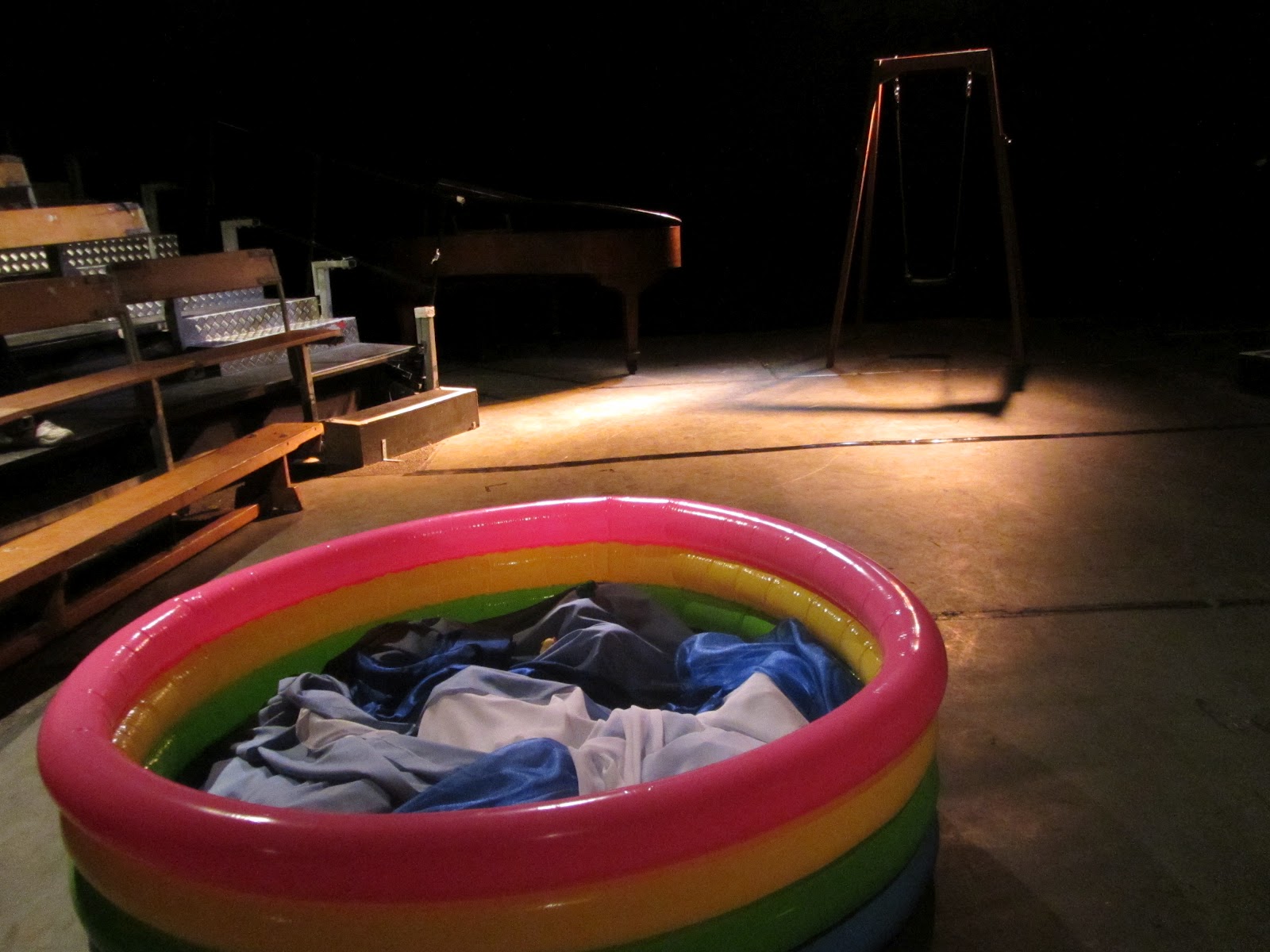
I have not idea what the point of the colourful paddling pool was though.

Susanna’s Secret was written by Ermanno Wolf-Ferrari and first performed in 1909.

It shared the theme of the first opera with a recently married couple going through some difficulties.

In this case the husband suspects the wife of entertaining other men while he is out at his club. The enduring smell of smoke is the clue.

We soon realise, but the husband does not, that the person smoking is his wife.

Returning early the husband finds signs of recent smoking and confronts his wife. She thinks that her smoking has been discovered and confesses, he thinks she is confessing to a lover. An amusing scene follows until the expected happy ending is arrived at.

Again the singing was exquisite. And this time there is some good acting too especially when the wife acts furtively to hide her smoking habit and is helped in this by their manservant, the doctor from the first opera this time playing a silent role as a straight actor.

Both operas were delightful and they worked very well together thanks to the common mood, common theme and common piano accompaniment. Another delightful evening at Grimeborn.

10 August 2012

Le nozze di Figaro at Glyndebourne (2012)

My fourth trip to Glyndebourne this season was to see The Marriage of Figaro, or Le nozze di Figaro as they prefer to call it.

This was the family trip which meant taking Dad (81) and eldest son (21). Youngest son not interested.

The logistics of getting us all there were complicated by Dad's age and son's commitment to an Ultimate (a.k.a. Frisbee) training session in Southampton and I did a lot of driving in three days to collect and return people.

The weather was kind to us and this was by far the most pleasant day in Glyndebourne this year and I think it is the first one where the patio heaters were not required.

We started the afternoon with tea and scones in Mildmay. The Archbishop of Canterbury was on the adjoining table. Celeb spotting is another Glyndebourne tradition and while I've seen lots of people famous enough for me to know them none have been special enough for me to make an effort to talk to. I only grunted at Michael Portillo last time because he parked next to us so that does not count.

After three cups of tea I took advantage of the good weather to walk around the lake. There were several new statues along the way and pride of place went to the diver at the far end.


After the walk there was just enough time to go to the Long Bar for the traditional, and most welcome, glass of Pimm's.

At the sound of the first bell we made our way up to the Upper Circle where we had fairly central seats in the front row. This is the view that £110 gets you.

I like this part of the house I like the best, mainly because it is about half the price of the Circle below and I think the view is just as good, if not better.

The last Figaro that I saw at Glyndebourne had a modern minimalist staging and it was immediately clear that this was going to be more normal as we see a full street scene welcoming the return of the Count and his wife. The classic car was bit of a surprise and it got one of the best reactions of the night.

The rotating stage was used to move between sets. We had several indoor and outside scenes and the stage just rotated between them. Obviously some clever work was being done behind the scenes to change one set for another as the turntable could only hold three scenes and more were required.

Clever stuff but not too clever to be distracting. Likewise each of the scenes were rich in detail and decoration but only enough to enhance the story and not too much to overpower it.

Figaro is a popular opera because of its complex plot (A pretends to be B which fools C but not D who plays along with the joke) and the range of lead characters.

Making the first impression is the Count. When he appears at the door of Susanna's room we know exactly what is on his mind.

The women are the strong characters in the story and while the Count and Figaro may think that they are in control at times it is really the Countess and Susanna who make sure that we get to a happy ending.

The acting is excellent and that makes the opera immensely watchable. The music is by Mozart so you know what to expect. There are no grand moments, no stand-out arias, but there are no weak moments either.

If this production has a weakness then it is in some of the singing. Again there is nothing particularly wrong with any of it but nor does any of it grab you. This was clearly a shared view and during the curtain calls there were no shouts of "bravo" and no stamping of feet - both of which you expect at Glyndebourne.

I guess that makes Figaro just an average Glyndebourne production, though, as I have said before, that is a high average and it was still a superb family day out. We'll be back next August.

29 August 2010

Don Giovanni at Glyndebourne

It has been a few years since I last saw a production of Don Giovanni at Glyndebourne, more years than this blog can remember anyway, but it's a great opera so there was no harm in going to see the new production this year.

I don't generally read reviews but I had picked up that there was something special about the set and the way it changes.

This is a recent trend at Glyndebourne, e.g. The Fairy Queen last year, and it's one I am unsure about. I fell in love of the simplicity of Glyndebourne that lets the singing and the music weave their magic without unnecessary distraction and I am not yet convinced that the new rich complex sets do more than distract.


The set makes an immediate bold statement as we see Don Giovanni climb out of the window of the bedroom of his latest conquest.

Following that it rotates a lot and slides a little to become various streets, rooms, gardens and, of course, a graveyard.

These transitions were slow and subtle which meant that they were less of a distraction than I feared but, on balance, I still prefer the simpler static sets like those used in Macbeth.

But let's get back to the music as that is what opera is all about and Mozart operas are rich with it, especially Don Giovanni.


Mozart's style is to have the characters singing to the audience as much as they do to each other as they enlighten us with their thoughts.

This means that the arias often have several people singing at the same time and all facing the audience. Magic.

All the singing was as good as you would expect from Glyndebourne and the opera is a joy throughout. The only slight disappointment for me was the character of Don Giovanni who while he sang very well was not that convincing as a Lothario and even less so as the unrepentant sinner bound for hell.

Perhaps the criticism is a little unfair but the previous time that I saw Don Giovanni he descended in to hell with a real swagger and bravado, bringing the opera to a truly dramatic ending, and I guess that few performances will match that level of emotion.

So, more a four star performance than a five but they are four very good stars and it would not take too much to tempt me to go to see that production again.