Showing posts with label lyric. Show all posts

16 September 2023

God of Carnage at Lyric Hammersmith Theatre

God of Carnage appealed to me for various reasons; it has won a few awards, it was translated by Christopher Hampton and the cast included Freema Agyeman of Doctor Who/Torchwood fame.

It was also described as "darkly funny" which is most definitely my sort of thing.

All that was enough to get me to fork out £34 for Circle A23, my usual area.

I made time for a little local walking, which included a look at The Aircraft Factory, before heading to my recently adopted pre-theatre eating place of choice La Petite Bretagne where I went for the goats cheese crepe. It is a good place and meets all my needs but it is still a shame that Lyric does not do full meals any more.

It was also a shame that this performance had no interval as that meant no ice cream. I would like to give Lyric more money but they made it hard for me to do so this evening.

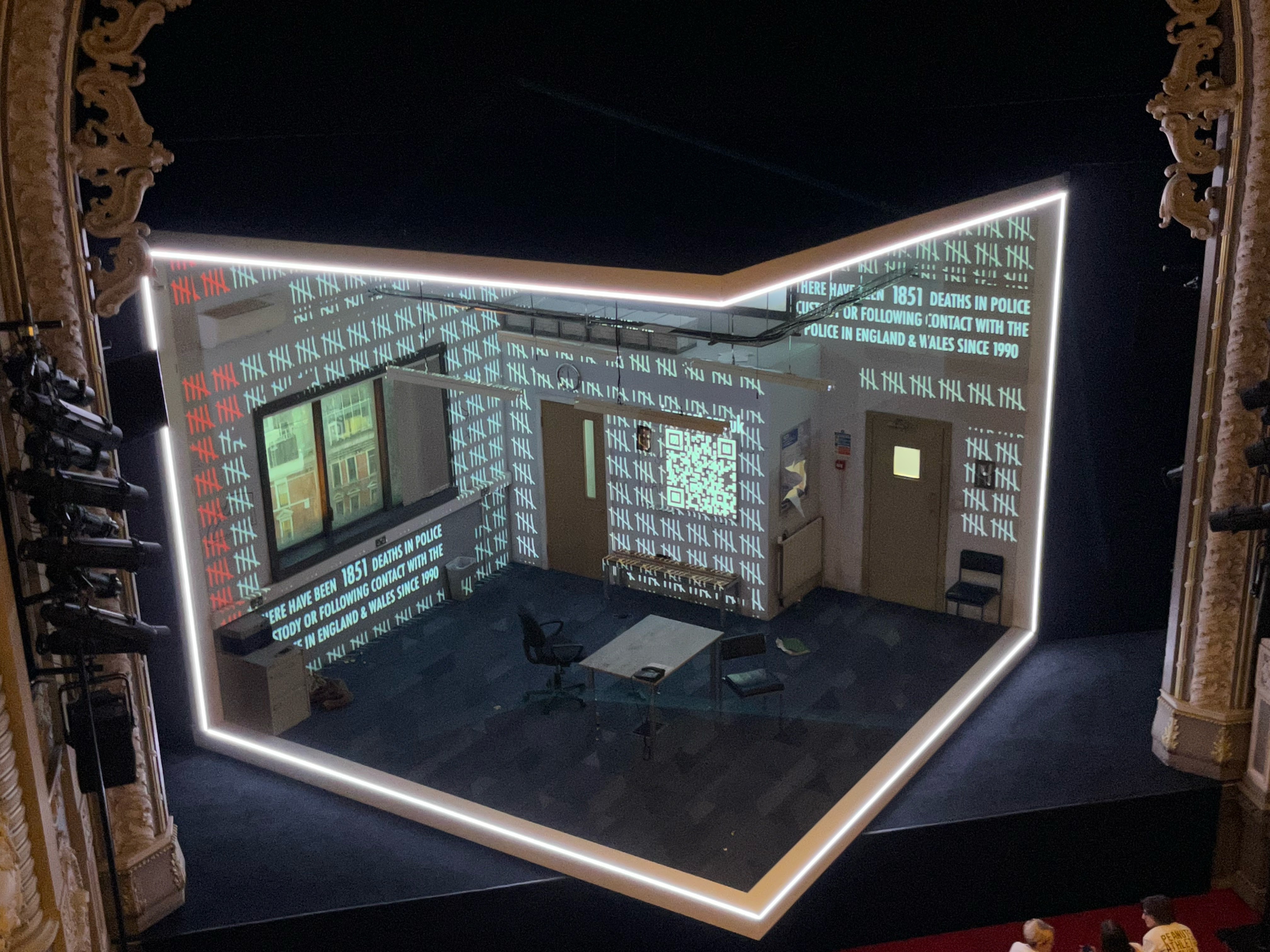
The set was an immediate plus. I liked the elegance and the simplicity of it. Much later I realised that it was rotating slowly though why it was doing so remained a mystery to me.

The fairly simple premise of the play was the meeting of two couples after their sons were involved in a violent incident at school. In the attempt to resolve the situation things obviously did not go to plan.

The discussions got complicated and changed direction many times, being deflected by things like repeated phone calls, a (probably) dead hamster and a (possibly) dangerous drug.

None of these sub-plots grew into anything significant and the play remained at a fairly constant level. It was constantly humorous without developing in to, or descending in to, a farce. That humour came from the interactions between the four different people and was reinforced wonderfully by the acting which was rich with knowing gestures and looks.

Leading the pack was Freema Agyeman as the wronged mother in a rather lovely outfit by, possibly, Christian Dior (I am not an expert on fashion logos!), and she led it masterfully.

I liked God of Carnage even though it did not do very much or go anywhere surprising. For an hour and a half we watched four people struggle to cope with the situation that they found themselves in and with each other. Things were said and looks were given that many of us could relate to and which made us chuckle in shared embarrassment.

25 April 2023

The Good Person of Szechwan at Lyric Hammersmith

I do not need much of an excuse to see something at Lyric Hammersmith and a play original written by Bertolt Brecht and brought up to date in an exciting way was more than good enough.

I was a little bit cautious with the booking and went for one of the cheaper seats Circle A1 for  £32. When two of you are going to the theatre two or three times a week then the costs can mount up and the state pension is not a great deal of help.

We had seen Al Murray in the afternoon in Chiswick and walked across to Hammersmith and had enough time to grab something to eat at La Petite Bretagne before running across the square to the theatre.

From the start it was obvious that this was a brash production thanks to a bright pink stage that sloped at the far end. On the stage was a paddling pool.

The brashness continued with flamboyant costumes, more weird props and actors sliding on to stage via the slope. In its mood, 

It reminded me a little of A Midsummer Night's Dream which I had also seen at Lyric Hammersmith (twice). A good sign.

Still obvious amongst the delightful chaos was the original Brecht story about goodness and the role of money in society. The serious story meshed well with the frivolous production to produce a show that was both highly entertaining and also intellectually stimulating.

28 March 2023

Accidental Death of an Anarchist at Lyric Hammersmith

Lyric Hammersmith is one of the several theatres that I keep a particularly close eye on but, even so, I was not especially tempted by Accidental Death of an Anarchist until the reviews came in.

By then many other people had decided to see it too and I was forced into the Upper Circle, for the first time, and I paid £23 for seat A16.

On my previous visit to Hammersmith I found what I hoped was, finally, a reliable pre-theatre eating place, La Petite Bretagne. and I was pleased to find it did the job very well even if I overindulged slightly with both a savoury and a sweet crepe. The place was pleasingly busy and next time I'll book a table to be sure of getting in.

Across the square at Lyric, I had just enough time to grab a pint of something brown to quell an annoying cough before climbing all the way up to the Upper Circle, you have to go up stairs just to get to the Stalls. I was a little bit vertiginous up there but no more than expected and the view was excellent.

I knew that Accidental Death of an Anarchist was a farce but other than being very silly I did not know what that meant, The farces I am more familiar with have lots of bedroom doors, semi dressed people in the wrong places and mistaken identities but this was none of that, it was an absurd situation created by and centred on an absurd character. Possibly something like The Mask, but it is a long time since I last saw that film so that may be a false memory leading to a false comparison.

The absurd character in the centre is a self-confessed former mental patient who through chance learns of an investigation of a police incident and through by taking an unexpected opportunity and making a quick change impersonates the person leading it.

In conducting the investigation he makes the various policemen say silly and contradictory things as they explain how the anarchist's fall from a window was suicide rather than police murder.

That description does not do the play justice as that simple scenario was horrendously funny thanks to the original story, Tom Basden’s updated adaptation and the mesmerising performance by Daniel Rigby. It was simply one of the funniest plays I have ever seen.

But there was a very serious side to it too as the play was about one death in police custody and made references to the many other cases in this country. We were left in little doubt that the farcical policemen did indeed kill the anarchist, and it took a maniac to reveal it.

Bt wrapping a serious message in a farcical story Accidental Death of an Anarchist made excellent theatre.

29 June 2021

Out West at Lyric Hammersmith was a gratifying return to theatre

It is a cautious return to theatre for me and I have deliberately missed several shows that I would probably have gone to in better safer times two years ago. The first show to tempt me back was Out West at Lyric Hammersmith, partially because Lyric is one of my more regular theatres and partially because one of the three plays was written by Simon Stephens. I am enough of a fan of Stephens for him to have his own tag on this blog.

As expected, covid played havoc with my usual Lyric plans, which include eating in the bar there, but the makeshift plan of going to the nearby Hop Poles for a pint an a vegetarian plate. It was also a chance to catch the end of the England v Germany game which had the decency to finish before the theatre started,

It was probably stated on the Lyric website somewhere, which was either unread or forgotten, but this was not a random collection of plays, they all had a connection with Hammersmith (hence, I presume, the Out West title) and they all said something about racism.

The Overseas Student in the first play was Ghandi and it described his time in England studying law, a story I knew nothing about. I liked the way the story was told and it was interesting to learn connections to things I did know, such as the first asian MP Dadabhai Naoroji. I had come across his plaque just off Amwell Street in a road now named after him.

It was also interesting to learn that Naoroji was arguing then that Britain's wealth was at the expense of India's poverty. 

As with all of these plays this was a solo effort and Esh Alladi was excellent as the young man trying to get on in a strange land. The play, by Tanika Gupta, was a simple chronological narrative and that was fine, there was plenty enough interest in the story to not need theatrics.

Blue Water and Cold and Fresh was obviously written by Simon Stephens because of the swearing, though it came nowhere near the record for this that he set in Christmas. It was also obviously written by somebody interesting in the construction of plays and seeing some of the scaffolding added to the fun, as did spotting the recurring themes like sunlight and cups of tea. 

At first most of the interest came from discovering the structure of the story and the geography of Hammersmith then the narrative grew as we learned more about the protagonist and his family's past and then racism entered the story with a jolt.

Tom Mothersdale was measured and convincing as the man trying to understand his father by revisiting his past homes and reliving some memories of those times.

Go, Girl written by Roy Williams and played by Ayesha Antoine also switched between times and in this case it was a mother with a problematic daughter who thought back to when she was her daughter's age and had had the honour of singing to Michelle Obama who made a visit to her school.

Their story was one of both issues and possibilities and, in the end, Go, Girl proved to be good advice.

Three relatively short single-handed plays on a simple set was never going to be an epic but as a cautious return to the theatre this was an excellent and very enjoyable evening.

06 March 2020

Love, Love, Love at Lyric Hammersmith was nicely done

Lyric Hammersmith is one of my home theatres, that is it is one of the easiest to get to/from, and so it is one that I go to quite regularly. Of course the theatre's location is not enough of itself but the prospect of a Mike Bartlett play (yes, another one) was enough to get me there and getting Circle Seat A23 for £21 seemed like a great deal.

Pre-theatre for Lyric Hammersmith has long meant eating in the Cafe and Bar beforehand and more recently it has also meant having a coffee and some cake in the ground-floor cafe too. Between the two I went for something of a walk/explore through Brackenbury Village which was good for both exercise and curiosity. The walk kept me away from the theatre for more than originally planned and I had to forego the main meal I had planned and go for a couple of small plates instead, and that turned out to be a great plan.

The central devise of Love, Love, Love was unusual and clever with the play consisting of three scenes in the same family each scene separated by twenty years.

The story started in 1967 and so we also had the "Love, Love, Love' lyrics from The Beatles' song All You Need Is Love.

Scene 1 felt something like The Young Ones with two students and one of their brothers together in a scruffy flat for a date that does not go to plan. This was more chaotic than romantic and there were plenty of laughs too.

In Scene 2 they are a couple juggling teenage children and their own professional and social lives. It was almost My Family. Somewhere along the lines a few wheels fall off a bus.

In Scene 3, and an ice cream later, the parents are living the Baby Boomers' dream with financial security while the two children, for different reasons, are struggling. This was a dark scene and no sitcom comes to mind. Love here became an excuse for not doing more, "I love you but ...". The main point made here was one that I had already accepted and I could watch this scene in smugness rather then shame.

My enjoyment was enhanced by the presence of Nicholas Burns who played the hapless Martin in Benidorm. It is always a treat to discover a Benidorm actor on stage. Surprisingly, his biography on the Lyric Theatre website does not mention this major role, especially when it helps to confirm his comedy pedigree which was very much on show here.

Love, Love, Love did not push any boundaries or stretch any mental muscles but it was funny and clever and nicely done.

24 January 2020

Thrilled by Faustus That Damned Woman at Lyric Hammersmith

Because of its convenient location, Lyric Hammersmith is one of the theatres that I go to most regularly and it does not take much to get me there. Which is another way of saying that I cannot quite remember now why I booked to see Faustus That Damned Woman.

I must have booked early because my seat was right in the centre, of the Dress Circle A14 for an incredibly modest £20.2.

But first I had to eat and for the first time I went to both Lyric Cafe on the ground floor and Lyric Bar & Grill on the first. In the cafe I had a coffee and some cake to take the edge off the afternoon before going upstairs for a vegan burger (it was Veganuary) and a cautious half of 5% Crazy Horse chosen because that was the name of Neil Young's main backing band.

As soon as sat down my view of the stage told me that I was in for something different. I was already excited.

I knew some of the bare bones of the Faust legend but that neither helped nor hindered me. The core element, selling your soul to the devil, was there but that was about it.

The deal having been struck we followed Faustus over the centuries as she tried to make her side of the deal count for something. In this she was joined by a jovial daemon dressed in white and was helped by two prominent women pioneers.

The story was articulate, intelligent and entertaining and so did not need an special effects to help it along. But it got them anyway and they made a good play something really impressive. The stage stayed much the same and the clever things were dome with lights, sounds and projections.

Faustus That Damned Woman was a tapestry of delights with a strong story skilfully embellished by the staging and the acting. Everything about the production thrilled and excited.

13 April 2018

A Midsummer Night's Dream at Lyric Hammersmith was hilarious


Two years ago I was tempted to see this version of A Midsummer Night's Dream at Lyric Hammersmith and loved it so when it came back for a couple of warm up dates before a national tour I was tempted to see it again. My Circle Seat A22 was just three away from where I had been the first time and, remarkably, at £21 was about £14 cheaper.

I had remembered some of the main themes, like the ones given away in the poster of Oberon in a superhero outfit bursting through a wall, and some of the detail but I had forgotten just how funny it was. Obviously I knew that it was going to be funny, that is why I went, but it was much funnier than I remembered and I was laughing almost all the way through.

That started with the announcer who did a stand-up comedy routine to introduce the show with lines like, "I hope that you all have a good night. Not this one, obviously, but one day." He set the tome for the evening and was an excellent warm up session for what followed.

What followed was a Shakespeare / Pantomime mash-up. A lot of Shakespeare's A Midsummer Night's Dream was in there, including a lot of the original language, to which the pantomime added slap-stick, music and some topical jokes. The Shakespeare element was also there in the acting which was excellent all-round and I particularly enjoyed the way the characters interacted when they were not the centre of attention.

And the food fight was just brilliant.

A Midsummer Night's Dream was a cunning combination of culture and comedy.

30 January 2018

Things I know to be True at Lyric Hammersmith


Something about this show appealed to me so I went. It certainly helped that it was on at Lyric Hammersmith which is both convenient and has good front of house facilities, including decent beer and tasty mushroom burgers. This time I went to the right side of the Circle, just for a change, and happily parted with £35 for seat A6.

Thinks I know to be True was a set of family dramas. That family were two parents and their four grown-up children, two women and two men, and each had their own drama. These dramas were revealed sequentially making the play deliberately episodic.

The dramas were more dramatic than those that most families have to deal with. One or two could be expected but all six was a lot to bear. The father was made redundant at 56 and had not worked since. He had spent so much time working in the garden that there was nothing left to do. He was frustrated and bored. His was by far the least dramatic of the dramas.

To mix things up a little, though of no direct relevance to the plots, there were frequent touches of physical theatre such as sliding furniture onto the stage or lifting and spinning one of the characters. These short pieces created breaks between the dramas and gave us all a chance to breath.

While never hitting any exceptionally high notes Things I Know to be True maintained a high level of interest and entertainment. This was down to the excellent cast and the skillful production.

The one negative was not the play's fault. There was a school group sitting immediately behind me and some of them spoke constantly, despite being asked politely at half-time not to, while the others were content just to eat noisily. This was particularly annoying during the several quiet scenes. Theatres could and should do more to encourage good audience behaviour.

Luckily Things I Know to be True was a strong enough show to keep most of the audience engaged and to combat the disruption from the less than attentive audience members.

07 April 2017

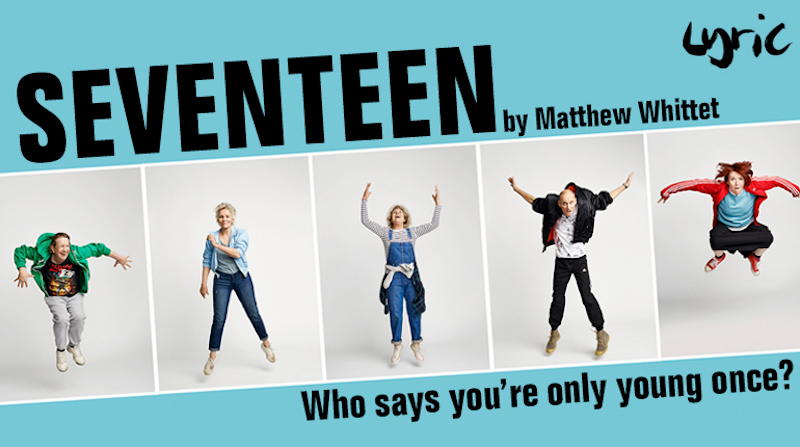
Seventeen at Lyric Hammersmith was charming and profound


The premise behind Seventeen was simple and intriguing. It was a play about seventeen year olds where all the actors were seniors. That was enough for me to find £30 for Circle Seat A19, a familiar part of the theatre for me.

Also familiar were the veggie burger and beer that I had in the Lyric Cafe beforehand. Lyric is definitely one of those theatres that gets front of house right and that makes a big difference to the evening and encourages me to go more often.

The stage was simple set, usually a good sign, with just a couple of pieces of children's play equipment.

The children congregated in the playground after school, and this was their last day at school ever. A time to reflect and a time to look forward.

What followed was, as far as I can recall of being that age, what seemed like natural teenage banter about loves, relationships and jobs. The conversations flew all over the place due to their short attention spans and different priorities. It was serious, coarse, tender, funny and trivial. And all engaging.

Seventeen was quick paced as the children moved in an out of the playground. Small groups formed and broke up and the mood and the subjects of their discussions changed as they did so. It was cleverly done and kept the play lively and interesting at all times.

The incongruous age of the actors was not an impediment to the story telling and I think that their experience as actors helped it. Using old actors may have been done as a gimmick or to make a point about ageism but, whatever the reason, it worked.

Seventeen was a lovely piece of theatre.

11 March 2016

A riotous A Midsummer Night's Dream at the Lyric Hammersmith

Having rediscovered the Lyric Hammersmith with Herons I was quick to get back there to see A Midsummer Night's Dream.

Shakespeare is quite a pull for me but I had seen Dream not that long ago, and a musical adaptation too, so it needed to be something special to get me to see yet another version and YouTube convinced me that this was special. The short clips showed Oberon in his superhero outfit with a large "O" on the front and were heavy with slapstick. It also helped that this was a return of a popular show.

I decided to work at home that day and finished promptly to eat (and drink) in the cafe there. As on my previous visit I had the excellent veggie burger and a bottle of a craft ale. Neither was cheap but both justified their price.

I chose a seat in the top price bracket, Circle A18 £35. This was just two seats away from where I sat for Herons so I knew that the view would be good. One reason why I always log my seat number and take a picture of the view is that it helps me to choose my seat the next time that I go to a theatre I am not that familiar with.

The show opened with an Irish announcer setting the scene. This quickly set the tone and the mood; he made some very topical and political (anti-Tory) jokes, swore at some young men in the front row for talking, and explained that Dream had a play within a play like Shakespeare's other play The Matrix.

What followed was an incredible amount of fun that remained very true to the original while embellishing it with lots of visual humour. As an example of this, the tears in the walls, roof and floor show where characters made unexpected entrances and exits.

Also added to the original script were some pieces of music and some colourful language. The age guidance was 14+ but the girls behind me looked quite a bit short of that. One of them asked there mother, "What's that?", when Puck picked up a condom packet and that's a conversation that might be a little awkward. I'm not sure that they got the hung like a donkey references either.

And then there was an all-cast food fight that got some of the audience involved too.

A Midsummer Night's Dream was imaginative in design and skillful in execution. It was a Shakespeare for the modern age that I loved immensely and recommend heartily (for those aged 14+). 

12 February 2016

Herons at the Lyric Hammersmith was astonishing

I had not been to the Lyric Hammersmith for quite a while, I was last there for Metamorphosis in February 2013, and it had dropped off my radar slightly. It got back on with Herons as that was written by Simon Stephens who, among other things, also wrote ChristmasPortThe Curious Incident of the Dog in the Night-Time and an adaptation of Three Sisters.

The Lyric Hammersmith has the advantage for me of being in Hammersmith, the clue is in the name, as various tube lines lead there from Richmond, where I live, and Kings Cross, where I work. On this occasion I was at work and took a stroll to Great Portland Street where I took the Hammersmith and City line.

I knew from my previous visit that the Lyric Hammersmith did food so I made my plans to eat there before the show. That plan worked extraordinarily well despite the vegetarian options being limited and unimaginative sounding as the vege burger that I went for was almost certainly the best vege burger that I had ever had. The burger itself was delicious and the meal was elevated to its leadership position by the salad that went with it, avocado always works for me, and the use of pitta bread rather than the bland burger standard roll. I'll have that again next time. They had a nice expensive craft beer too.

I had gone for a seat in the front row of the Circle, A20, which was a modest £30. Sitting there waiting for the play to start the most obvious feature on the stage was the video of monkeys playing on the large screen at the back. That should have alerted me that something unusual was going to happen but I failed to pick up the clue.

Normally I would say something about the plot and the characters at this point but there was just so much in Herons that focusing on them would be to miss several big points.

For starters, the stage was flooded with water to the depth of around 10cm and stayed that way all through the play. The actors got quite wet, as did some of the people in the front row.

And that video of monkeys kept playing.

Things happened on stage that seemed to have no bearing on the story. For example, at one point the mother (who was not really present in that scene) was sitting on the small swinging horse on the front-right of the stage and she carefully took her wellington boots off and laid them sideways on the stage where they got filled with water. A while later she put them on again.

At other points some of the children went around the roundabout slowly in unusual positions, a another child sat in the water with shock etched on his face and children blew soap bubbles from the top of the lock. All of this happened away from the main action in the centre of the stage but complimented it by adding more textures, rather than diverting from it.

The story started with a boy blowing up an inflatable doll to celebrate, his word, the death of a girl who had been murdered a year ago by, it turned out, his older brother. The play remained violent throughout and had the language to match. There was some love too, though that got swamped by the violence and the threat of violence.

In the eye of this weird and energetic hurricane was Billy (Max Gill) who not just accepted that he would be bullied and abused but almost encouraged it by asserting his intellectual superiority over his bully. He also had to cope with severely dysfunctional and separated parents.

The main characters were school children and were played by young people. It would be tempting to make allowances for their ages but that was unnecessary as all played their parts well.

The combination of everything going on was something like the famous Phil Spector Wall of Sound where to pick out the sound of just one instrument was to miss the point. The glorious richness came from all the parts moving together and was absorbed at a primitive level rather than being consciously consumed.

Herons was theatre craft at its very best.

09 February 2013

Metamorphosis at the Lyric Hammersmith

I have only been to the Lyric Hamersmith a couple of times (my fault) and it is growing on me.

On this trip I got there late afternoon for some coffee and cake, then watched the France v Wales Rugby Union International on my iPad using their wi-fi and then moved from the coffee bar to the restaurant area for a pizza before climbing several flights of stairs up to the front row of the Circle to see Metamorphosis.

I had heard of the book, of course, but not read it. What attracted me to the play was the Lyric's description of it which explained that it was being put on again because it had been so successful the first time. It also sounded odd, and I like odd.

Things start off well enough. We meet the struggling but happy enough Samsa family. The father is out of work, the mother looks after the house, the daughter Grete is still at school and the son Gregor keeps them all afloat through his job as a travelling salesman.

Things start to go wrong when Gregor fails to get up at 5am for breakfast and so has missed his train to work. The family is worried and Grete goes upstairs to chivvy him along.

Gregor has changed overnight.

We do not know what into because he is not wearing a costume but we can see him crawling on the walls of his room, which is on-end compared to the rest of the house, and while he can understand what is said to him when he speaks all the family can hear is shrieking that forces them to cover their ears.

We, in the audience, can hear him perfectly well.

These two devices, the tilted room and the changed voice, is all that is need to convey the metamorphosis and this simplicity is the core of the play. We know a major change has happened but it does not get between us and the story.

That story is about the changes that Gregor's metamorphosis brings to other people, in particular the way that they react to him and the changed circumstances caused by the loss of his salary.

The family vary between being shocked, appalled and sympathetic. He is part of the family after-all and they have no idea whether the change is permanent or not.

Other people appear briefly, such as somebody from Gregor's work checking up on him and, much later, a possible suitor for Grete who she knows from the shop she works in and who is looking for a spare room to rent. Their encounters with Gregor do not go well.

The play works on some many levels (no pun intended) and there is a lot in there to feast on, such as Grete's violin, the positive power of a uniform, the impact of austerity on dreams and, at its heart, the workings of a family.

Gregor may grab most of the attention by climbing walls and swinging from curtains but the rest of the family are played excellently too.

To add another touch of strangeness there is also a soundtrack of songs by Nick Cave (lyrical genius) and Warren Ellis (not the comics one).

Metamorphosis is a story like no other and this stage adaptation reflects that admirably. It is unusual, complex and rich without ever being intrusive  This is theatre with a difference and it is a difference that I love.

09 November 2012

Desire Under the Elms at the Lyric Hammersmith

It is little over a year since I made a conscious connection to the works of playwright Eugene O'Neill with a faultless production of Anna Christie at the Donmar Warehouse. I have taken every opportunity since then to see more of his works and Desire Under the Elms at the Lyric, Hammersmith was the fourth play in the fourth theatre.

This was my first visit to the Lyric, despite its convenient location being easily reachable from Richmond by tube and bus. It's always nice to have a choice of routes in case one is disrupted for some reason.

The Lyric impressed me as I had a beer and a snack pre-theatre. The waiting areas are large, open and fresh. The refurbishment and redecoration are recent and stylish. It reminded me of the Lost Theatre that has also been refreshed recently.

Soaking up the modern ambiance only increases the shock of going in to the theatre. Nothing prepares you for the Victorian theatre entombed in a modern building.

I must admit that I would have much preferred a modern theatre that matched the modern spaces outside.

I am not against history but we have too many Victorian theatres that are too similar to each other to be interesting individually and which do not provide modern facilities such as leg-room and a guaranteed view over the heads in front.

I got over the second potential problem in the usual way, by securing a seat in the front row of the circle.

Desire Under the Elms is set on a small farm in the American Mid-West. Life is hard but reasonable. Living on the farm are the aged father who built it, his two late-twenties sons from his first marriage and his late-teens son from his second marriage. Both wives are now dead.

The future of the farm is a hot topic of discussion as the old man can only pass it on to one of them. This future is thrown in to turmoil when the father returns with his third bride and new natural heir to the farm.

The two elder sons leave to seek their fortunes in California leaving just the old man, his young bride and his youngest son.


The play turns sharply in this scene where the bride makes it abundantly clear that she is interested in the son. He is young and, frankly, has no chance and they are soon embroiled in an affair that everybody in the nearby village is aware of but which the old man is oblivious too.

There is a nice scene when a party is held to celebrate the arrival of a baby and the villagers do a strange but wonderful dance that they brought with them from somewhere in Europe.

The play speeds towards its expected gloomy end though which end and how gloomy is not apparent until you get there.

The play ends with a passing comment about the beauty of the farm. And that is as it should be as the farm is the central character in the play. Its history and future are what drive the story and lead the characters to do what they do.

The production is rather neat. Most of the scenes take place in various rooms in the house, the kitchen, parlour and two bedrooms, and these are wheeled on and off the stage as if they too were actors, reinforcing the idea of the farm as a character in the story.

The acting is pretty good too though the youngest son did have a tendency to shout when that was not necessary or appropriate. There was nothing to complain about in the other two main roles. The old man was proud and domineering and his new wife was sultry and scheming.

There was a lot to admire in this production and in the play itself. It made for an emotional and enthralling evening, which is what I hoped it would do.