Showing posts with label germany. Show all posts

12 May 2013

Chinese Garden in Frankfurt

One of the nicest things about travelling by train is that you can just walk on when it is time to go and that meant that I could have a final Sunday morning in Frankfurt before catching an afternoon train to Brussels and then London.

And I had somewhere to go on that morning too.

Returning to the belt of green around the old town I went to Bethmannpark. This is not strictly speaking part of that ring as it sits just outside it.

This park was pretty enough in its own right but what had attracted me there was the Chinese garden within it. Like the Chinese garden in Zurich, this was the genuine article having been built by Chinese people with Chinese materials.


It had all of the features that I expected in a Chinese garden from the many that I saw in China. Most important of these, in my mind, were the roofs, the water and the zig-zag bridge across it.

The overall effect was of tranquillity, as it should be.

I exploited that tranquillity by walking slowly around and through the garden admiring the acers and the architecture as I did so.

I also sat for long periods on one of the benches and in the pavilion just to revel in being there.


After that pleasant break it was time to face reality and head back to the station going the way that I came, by tram which took me directly there.

The Chinese Garden was like much of Frankfurt. It was not necessarily exceptional by itself, it was the cumulative impact of all the many good things that made the few days spent there whizz by with remarkable little time spent in bars and no time at all in shops.

11 May 2013

A long afternoon in the Museum für Moderne Kunst in Frankfurt

It was my last full day in Frankfurt (a Saturday) and I headed for the Museum of Modern Art (MMK), conveniently located on the West side of the old town.

The building is nicknamed the "piece of cake" because it looks like one. The footprint of the building helps to create some unusual spaces inside and the architect has played with levels too. Despite this the building is surprisingly easy to move around, unlike its equivalent in Hannover.

It also scored over Hannover in that photography was allowed. I had to fill in a simple form promising not to use them for commercial purposes and in return I got to wear a "photographer" sticky label for the afternoon.

The exhibitions were spread over three of the four floors, level two seemed to be offices, and I managed to get around all of them.

The Krazy House by Rineke Dijkstra was the main exhibition and bits of it were spread over the museum. A lot of it was videos recorded in England (the girl in the poster is from Liverpool) and it was a little strange hearing English again after a week in Germany.

The videos were off limits for photography but then a photo would not have told you much. These were real people dancing, talking and drawing. In one a group of children discussed Picasso's Weeping Woman (oddly on loan from the Tate) and some of the suggestions that they came up for for why she was weeping made you wonder what they were allowed to watch at home. Gory did not come in to it.

One of the features of modern art is that it comes in many forms which makes a walk round a gallery one full of surprises. Who could have expected a room full of furniture that looks as though it was arranged by the proverbial bull?


The photos on the wall are of the same girl/woman taken a year or two apart to show her progress from young girl to mother. I liked both the similarities in the pictures (the same subject seated) and their differences (her appearance and background). Simple but effective.

Pictures also featured heavily in the room next door. This was an odd collection of images that included, for example, the cover of a Marvel comic, the Bay City Rollers, a government leaflet on the Poll Tax, a beer mat, a cheque and various photographs. A collection of more-or-less everyday images brought together.

I looked at every single one, some of them more than once.

The collection of bottles in one corner added to the overall impression of strangeness that conflicted with the ordinariness of the individual images.

Not all of the exhibits were that traditional.


Making a piece of art by neatly folding colourful cloths was a stroke of genius. There were four piles and I chose this one for its colour and structure.

Equally modern and captivating were the spaces illuminated by fluorescent lights in two colours. The interplay between the two colours and the three lights gave the confined space a suitably strange feel.

One of the other highlights was also electronic.

The room itself was simple enough. A wide screen filled one long wall while mirrors on the two ends repeated the projected patterns to infinity. In the middle of the room, facing the screen, was a bench where about a dozen people could sit at a time. I sat there for a long time.


The display was a serious of modulating patterns each lasting for about a minute. Strange electronic beeps matched the movement. The combination was weird, hypnotic and beautiful. If I could have brought one installation home then it would have been this one.

Elsewhere in the museum there was so much more to enjoy.

Possibly the strangest was the plain white room with a pair of legs sticking out from behind a short wall.

The more familiar included some of Andy Warhol's Campbell's soup cans and Roy Lichtenstein's green and yellow brush strokes.

Back in the unusual camp were a collection of lampshades, a tidy bedroom, a rant against consumerism in posters and drawings, sketches of characters in the Jungle Book, and a room of old machinery with no obvious purpose.

I find the duration test a good way of judging how much I enjoyed a museum, gallery or exhibition and I was in MMK for around four hours. That must be some sort of record and is a fair reflection of how much there was to see and how much I liked it.

I emerged to find that the afternoon had gone and there was nothing left to do but find a cafe in Paulsplatz for the mandatory coffee and cake. This is what I go on holiday for.

10 May 2013

Museum of Applied Art Frankfurt

I arrived at the Museum of Applied Art almost by accident. I had crossed the bridge from the old town knowing that there were a clutch of museums there but not knowing which ones.

I skipped the Bible Museum and another dull looking one and opted for the iconic modern building of white and glass. The car outside is part of one of the exhibitions.

The building was as light and spacious inside as the outside promised with exhibition spaces on three floors. There were a mix of exhibitions in these spaces with no obvious connection between them. I liked that as it made it all the more surprising.

 One carefully shaded room had a collection of old Japanese prints. I had seen some of these in the Saatchi Gallery the previous year and had liked them then too.

The things I liked about them were the clarity of the lines and the subject matter with its deeply cultural significance. Even without the writing it is clear that this is from the Far East.

At that time I was taking pictures surreptitiously, having been scolded in a museum in Hannover, and it was only when I moved on to the next exhibition and I saw other people freely taking photos in full view of the guards that my camera came out and stayed out.

The Japanese prints were on display on the top floor which also held a cute cafe that proved to be the ideal place to have a coffee and cake. I think it is a universal law of museums and galleries that coffee and cake must be consumed; I'll keep doing that anyway just to be safe.

Another room, in one of the main spaces where daylight was encouraged in, had a collection of household objects. I had not expected chairs, lamps and bowls to be so interesting, but they were.


One of the main exhibitions was on Korean design, hence the Hyundai car outside and the Kia car inside.

There was strange collection of Korean things on show such as two large photos of a boy and of a girl in their bedrooms stuffed with blue/pink things, bizarre advertisements, take-away meal boxes that turn in to models, and a loop of short film extracts (not helped, but not hindered either, by being completely unintelligible).

What struck me about most of the exhibits was how un-Eastern then looked, so unlike the Japanese prints. Most of the Korean designs could easily have been mistaken for western ones with only the writing and the faces giving the game away.

What stole the show for me though was a series of posters by 601BISANG.

They looked great from a distance but were even cuter when looked at close up when the black blobs became fractal frogs. A wonderful idea superbly executed.


 Next door to the Korean display was something completely different.

Using a fake shipwreck as the pretext and theme, the exhibition brought together things from the year 1607 from across the world, hence using a trading ship as the thread.

The year 1607 was chosen because of the changes that were going on at the time. It was a snapshot of an era.

The ship had accumulated an eclectic mix of things which made it had to pick one as a representative, so I went for this navigation tool because it looked something like a smartphone.

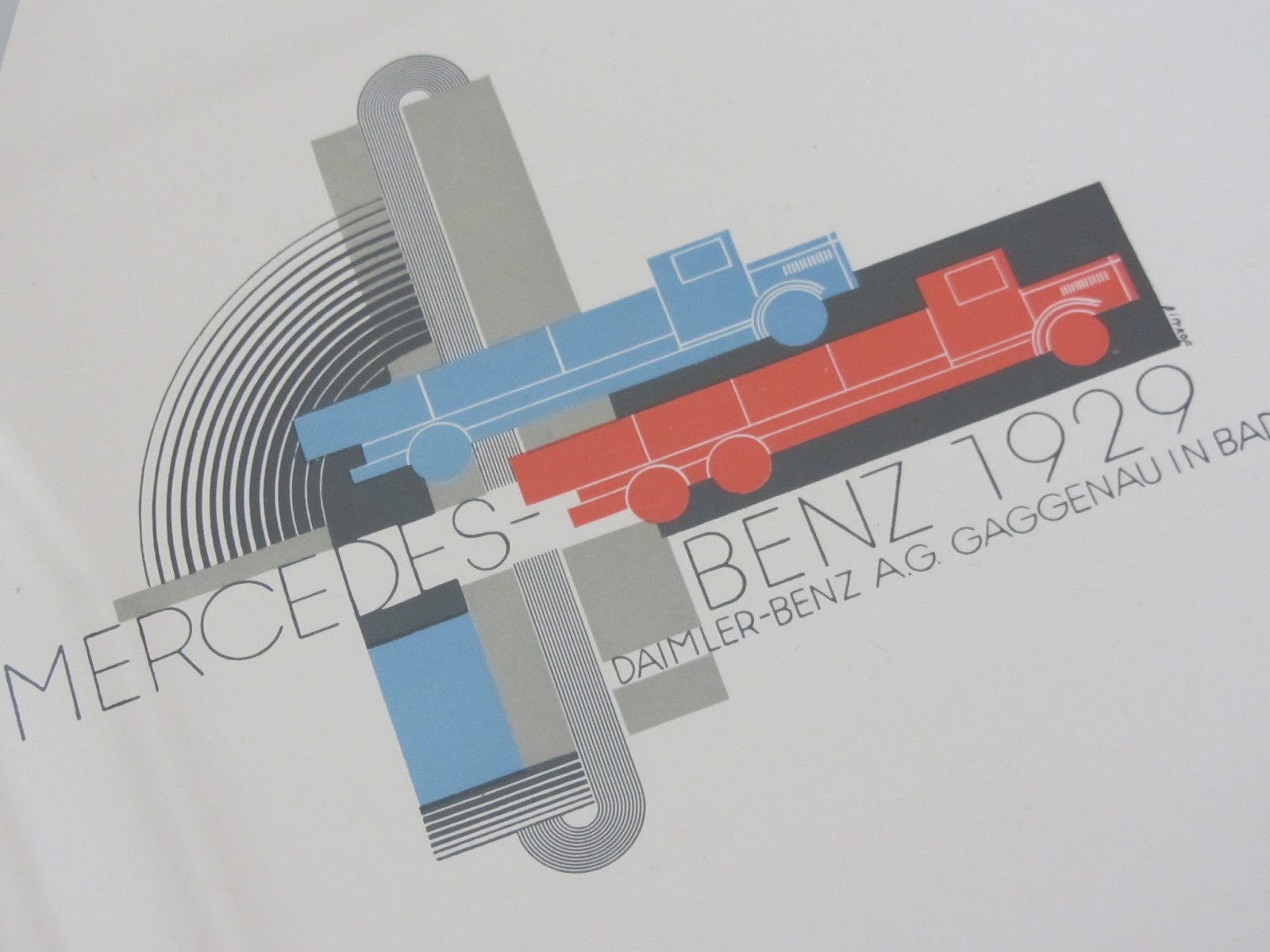
My favourite of the exhibitions was in one room on the ground floor and covered design in Frankfurt from 1925 to 1985, which included the creation of Braun.

There was a refreshing amount of typography and drawing on display from magazines and posters etc. and, as with the historical museum in Hannover (and elsewhere) that is what I spent most time looking at.

.

My two favourites were both to do with cars and Mercedes-Benz just edged it in front of Opel.

I thoroughly loved the museum because, like all good museums, it got me interested in things that I am not interested in. For example, I may have chosen not to go in if I knew that it was on stuff from Japan, Korea and 1607 but I did go in and I liked all of it.

Frankfurter Goethe-Haus


I actually knew something about Goethe before venturing in to his house in Frankfurt. That was thanks to a recent episode of Melvyn Bragg's In Our Time, always worth a listen and now it counts as a travel guide too.

Goethe-Haus is in the old town (understandably) on the western side so was easy for me to get to from my hotel on the same side of town. The signs were helpful too as the house was tucked away a little.

It was quite an imposing town house spread over five floors, but then Goethe was rich. The wealth was evident from the contents too though old furniture does not do a great deal for me and most of the photos that I took were of the wallpapers and the furniture fabrics.

There was some furniture that I liked, such as the large clock on one of the landings.


The layout of the house was fairly simple and each floor looked much the same. The stairs led off a large landing/hall off which there were a series of linked good-size rooms.

The rooms were presented much as they would have been in Goethe's time except that the daily clutter from living had been removed. It was like looking through a show home, which was probably the intention.

The furniture and fittings were all original but the house wasn't.

A display in the museum explained how the house was all but destroyed by bombing during the war. Such was its importance that it was rebuilt soon afterwards. The contents had been stored elsewhere and escaped harm.


Of course there had to be a desk.

Goethe did more than write but write is what he is best known for so the desk was an important exhibit. What struck me was how it small is compared to contemporary desks, my desk at home is 1.7m long and 1m wide.

Like everything else in the house it lacked the details of use, such as pens and paper, which I think I would have preferred to see.

At least the chairs had been neatly upholstered. They are my favourite part of this picture.

Next to the Goethe House, and accessible directly from it, is the Goethe Museum that has a collection of German art from Goethe's period.


A lot of the pictures were just the sort of thing that I do not like in art, that is portraits of people I have no interest in and landscape in which nothing is happening, but there was some weird stuff too and I like that.

The crazy picture with the horse is Johann Heinrich Füssli's The Nightmare and the swans above are from Carl Gustav Carus' Allegory on the Death of Goethe.

I have no idea what the imagery is about, and that was not important to me. What I liked was the fantasy nature of the composition, clearly something was going on and part of the fun was trying to work out what.

There were around fifteen rooms in the gallery altogether, about the same as in Goethe House, and while I was able to skip past the portraits quite quickly there were still plenty of dark and brooding pictures for me to marvel at.

Together Goethe House and Museum were more fascinating than I expected and what I thought was going to be a chore of duty turned out to be a real pleasure instead.

All that was left to do was have a coffee and the cafe across the road was just the job for that.

09 May 2013

A longer look at Frankfurt


On my first afternoon in Frankfurt I managed to see most of the old town, and more, so I had to move a little further away from the centre to start my exploring on the second day.

This was a Bank Holiday there which meant that many things were closed, including almost all of the shops (how unlike England!), and the the public transport was less frequent. Still, my plan to catch a bus to the opera house worked.

And a very nice looking opera house it was too, very traditional in design and scale, it could hardly be anything else.

It sat in one of the open spaces created by the former boundary to the old town, much to its benefit. Again the contrast with London is obvious, and not in London's favour, with the Royal Opera House sitting on a busy road.

The square there was also the humble start of the main pedestrian route through the town which I headed down in the absence of anywhere better to go. That brought me to the square where I had eaten the night before. Then I had noticed an observation deck on the top of a shop and I was pleased to find that this was open, even though none of the shops underneath it were.

I ascended to the top of the little mall only to discover that all I could see from the top was Frankfurt and that is not very interesting.


And I had to scare myself half to death to get there. The last leg was by an open stairway made all the more interesting by being wet after that morning's rain. At least the cafe on the top level was open and I was able to have a customary mid-morning latte to ease the nerves.

From there I continued along the main pedestrian street that I had admired in the gloom the evening before.

Not surprisingly it looked even better in the day light though the absence of people gave it a somewhat eerie look.

The street ended at an empty market square at the other side of the old town and returning there seemed the best option, so I did.

The square was busy but not packed, no doubt the rain and threat of more to come was a deterrent to some.

This was the view of the main square looking north towards the road where the trams ply their helpful trade. Behind me was the river.


And one of the many bridges crossing that river was this heavily engineered pedestrian bridge that looks as though it was build for much heavier traffic though it was not wide enough to carry two lanes of traffic.

The bridge was appealing but the far bank was not so, having ventured along the bridge for a while to get the views up and down the river, I turned back toward the old town.

As before, I had nowhere in particular to go and plenty of time to get there so I explored in my usual fashion, choosing each street on its degree of interest rather than its direction. Of course I had the safety of a travel-card and the knowledge that the city had a richness of trams, buses and also an underground train.


Somewhere along the way I found this building. It was not unique in its interest (I was taking around 200 photos every day on the holiday) and it got selected simply because of the angle of the shot that makes the building fill the frame.

A rest was called for so I headed back to the hotel.


The easiest way back to the hotel was a tram back to the main station and then walking through it, in via the main entrance and out on the north side. I could have walked around it but that route was hampered by a car park, a taxi rank and a distinct lack of a pavement.

Rested, I went back out in the evening and made a point of going back to Willy-Brandt-Platz to take a picture of the large euro sign. I still think that it is an excellent idea and I am sad that the UK shows no intention of adopting it.

That was my second day in Frankfurt and, despite the early rain, it did all that I could expect of it. I had a good walk and found some interesting things along the way. And that was exactly what that holiday was meant to do.


08 May 2013

Dipping a toe in to Frankfurt

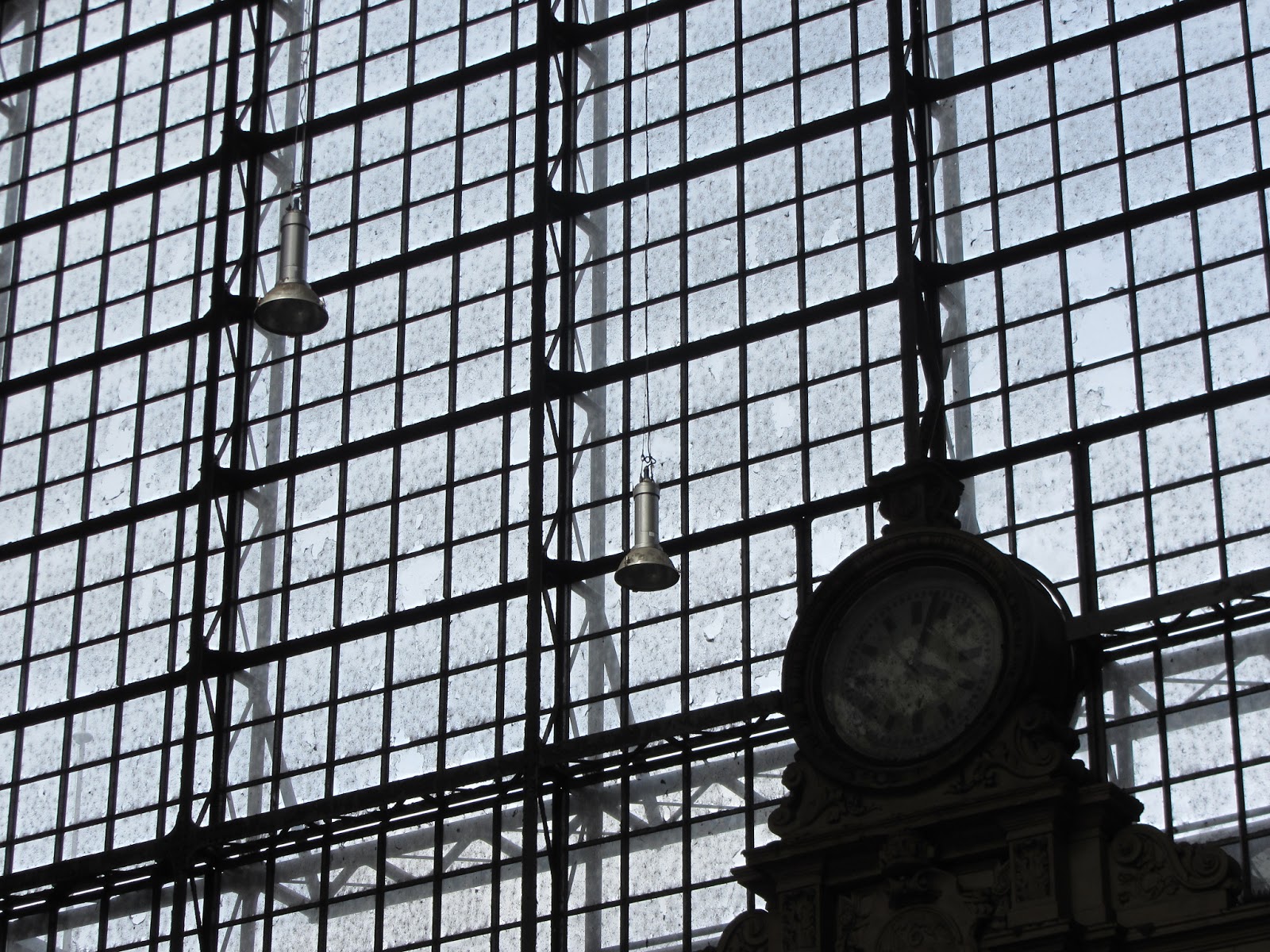
The train journey from Hannover to Frankfurt was easy, pleasant and relaxing. It also terminated at a magnificent station with several large arches.

The hotel was just across the road so bags were quickly disposed of and the hotel also provided a four day travel pass so I was soon on a tram and heading the kilometre or so in to the heart of the old town.

The short journey there took me through some distinct areas. Next to the station there were lots of ethnic restaurants and cheap shops, then these gave way to a belt of modern offices and pedestrianised streets, before these in turn gave way to the old town.

At the heart of the old town was two squares separated by roads sporting lots of trams. The main square had the Town Hall on one side and this collection of shops and restaurants.


The bar on the right is the one that I chose to rest and enjoy the life in the square. I also had a beer.

Behind the square I found the cathedral.

It was not that special, and I had to clamber around a building site to get there, but I cannot resist a bit of Gothic architecture and this cathedral had plenty.

That was about if for the old town which was a lot smaller than I expected and I was soon out of it. Looking for somewhere else to explore I headed for the river.

The rail tracks along the bank gave testament to the river's industrial path that, in this section at least, had been superseded by park-lands, paths and seats, all of which attracted people, like myself, enjoying the views and a little exercise.

There were always plenty of bridges on view, and I liked that.

The most unusual bridge was almost upstaged by the brick tower on the opposite bank that looked as though it had got lost.

Keen to keep walking but not wishing to leave Frankfurt completely, I turned away from the river once I got to the boundary of the old town. This was a green belt about 50m wide that circled the town.

The roads in to town crossed it regularly dividing the belt in to a series of separate parks, each with its own surprise.

Art and fountains were plentiful despite the out-of-the-way feel to the gardens. It is not just the large open spaces that benefit from such things.


As the sun began to slide down out of site I headed back to the centre of the old town, never that far away, looking for food. And more beer.


That took me unintentionally to the main shopping street that was bustling despite the late hour that meant that none of the shops were open.

Even in the gloom and impending rain it was easy to be impressed by the street. It was pedestrianised, wide, filled with neatly trimmed trees (I guess to provide shade in Summer) and plenty of seats.

Why doesn't Oxford Street look like this?

At the end of the street was a small new square and a large old restaurant with seats tumbling out of it. It was the ideal place for the food and beer that I was after. Vegetarian options were limited but I am not fussy and was quite satisfied with my tarte flambee, a sort of French pizza that I first had in Strasbourg the previous year.

And that was that for my first day in Frankfurt.

I had been walking for a few hours, admittedly with a couple of beer breaks, and it was time to try the hotel bed (why do foreigners fold duvets like that?).

It was a short walk down to Willy-Brandt-Platz to catch a tram back to the station.

The Platz was the last eye-catching thing of the day. It was the hope of the European Central Bank, though they seemed to be building a new one on the other side of town.  Announcing the bank was a large Euro symbol, just by the end of the building on the right.

Frankfurt did quite a lot to please me in the few hours it had to do so. It entertained me with its old town, river, parks and new buildings. The only problem was I thought that I had seen everything and I was going to be there for another couple of days. I need not have worried.

07 May 2013

Two different museums in Hannover

My third and final day in Hannover was mostly spent in museums with a little bit of walking between them thrown in for good measure.

First stop was Historisches Museum Hannover, i.e. the museum of the history of Hannover.

This was a mixed bag as a foreign visitor. All but a couple of the information displays were in German only but there was an audio guide in English that explained some of the main exhibits.

Inspired by this and by my natural reluctance to follow regimes, I wandered around the museum randomly taking no account of chronology or theme, not that I could tell how the museum was organised.

Luckily for me the museum had lots of simple artifacts that told their story clearly without words and I was able to find lots of things to look at from model buildings to children's toys to farm implements to pictures of factories.


And this marvellous car.

There were many posters and paintings too and I liked a lot of these, especially the simpler ones in the style usually associated with Soviet propaganda; the strength of the worker and all that.

I also like this one because it has an aeroplane in it and has a neat composition with the middle third full of sky.

There were some Nazi era posters too (much like the cover to Hawkwind's album Astounding Sounds, Amazing Music) but I did not want to take a chance on any of those here in case that German text said something deeply inappropriate.

There was stuff about the war that I could understand and the pictures of the devastation caused by bombing in 1944 were difficult to reconcile. I hope we have moved on from the mass killing of civilians.

What was less controversial was the information on the creation of Hannover. I recognised the zig-zag style of the original defences to the Old Town as they are still very evident in Amsterdam, What I did not know was that this was a Dutch design that the Hanoverians copied.
 
These features have long gone from Hannover for one simple reason, they did not work! They were filled in after Hannover lost an important battle, probably against the French who often seemed to be riding around in that part of Europe before Germany was a country.

I found it interesting that when Hannover extended to a new town on the other side of the river that the new town was not covered by the charters that established Hannover and so, for a while, it was legally and politically separate from it.

I am not a great fan of history and even less so of German history so it is to the museum's credit that it kept me occupied for a couple of hours. The posters and models helped.

Maxed out on history I then went, after a suitable break for tea and cake, to the Museum of Modern Art which is a little out from the centre of town but is nicely situated by the lake. It's on a corner plot and that must have contributed towards the building's confusing layout but I suspect that the main culprit was the architect and his hatred of square rooms connected by straight and level corridors.


As a result I know that I missed some of the museum out. There were places where you could glimpse other levels and sometimes you then found yourself there and other times they proved to be elusive and undiscovered.

The building was frustrating but the art was delightful. The bad news is that photography was forbidden but the good news is that the museum had the least attentive guards that I have ever seen. For example, four of the five ladies on the lower ground floor congregated together for an earnest conversation leaving the rooms unattended.

There was, of course, quite a lot of works by Niki de Saint Phalle and these went far beyond the colourful bulbous figures that I had seen elsewhere. For example, one of my favourites, one of the anti-war pieces, was a large figure made out of all sorts of scraps including lots of toy guns.

This is by her too and is a self-portrait.

There was one bulbous figure and that was down in the depths of the museum next to a children's drawing area.

There were a few sculptures down their too and elsewhere there were some installations (I liked the brown coat hanging against a brown wall) but most of the rooms (that I found) had paintings in them. And I found them all very approachable too.

The rooms were organised by style, e.g. cubism, though I did not discern any chronology, or other sequence, as I moved through the gallery.

Moving from one style to the next produced some interesting juxtapositions. This enhanced the experience for me as I was treating the gallery like a lucky-dip but I could imagine that it could be frustrating for a serious student looking for connections and developments in artistic styles.

On the plus side, the rooms were bright and white, as galleries are meant to be these days. and the pictures were well presented. On the negative side, a lot of the paintings (understandably) were behind glass and that made reflections a bit of a problem at times, especially when trying to take a close-up photograph (smiles).

The confusing building was a problem and almost spoilt the day, but not quite. I managed to find enough rooms with enough interesting things in to keep me entertained for another couple of hours, and that was a rewarding day done.

Is Nord LB, Hannover the world's strangest building?

The Norddeutsche Landesbank Headquarters in Hannover is marvellously bonkers in the same way that the Lloyds of London is. Similarly it both shrieks its difference and yet also manages to hide among its neighbours.

The outside facing the roads is fairly normal and it is only the staggered tower the juts up in the middle that suggests that it is anything unusual.


Venturing through an opening in to the centre the full magnificence of the building is thrust in to your face. There are sheets of metal and glass flowing in all directions, tubular walkways connect various parts of the building and it all sits in a shallow pool of water.


This picture is taken from the far left of the previous one and is looking back towards where that one was taken. There are shops and cafes on the right which front on to a main road. The chairs and strange pink seating belong to one of them,


Turning to the left revealed one of the other entrances to the complex building. Moving closer to the door I discovered that the tenant is the British Consulate, i.e. I am paying for some of our government officials to work in one of the world's strangest buildings. I am sure they can justify the cost of that.