Showing posts with label grimeborn. Show all posts

29 August 2017

Thrill Me: The Leopold and Loeb Story at Grimeborn did thrill me


The premise of Thrill Me: The Leopold and Loeb Story, child killers, may not be an obvious one for a musical (that is more opera territory) but it intrigued me and the promise of a "multi-award-winning, five-star production" was enough to get me to find £30 for seat G16 in the first row of the Balcony.

I would have gone for a decent seat downstairs but other people were as attracted to the show as I was and my favourite seats there had gone by the time that I was organised enough to buy tickets so I thought I would try the Balcony. I may have been up there before but only once and that would have been quite a while ago.

The seat was OK though there was a slight disadvantage in having a safety rail (I would rather see than be safe!) and a bigger one in not being allowed to take drinks up there. I will try and be faster off the mark in future to get a downstairs seat but the Balcony is a fair alternative.

I had not done much (i.e. any) research before hand so the minimalist production was a pleasant surprise. There were just two players, Harry Downes and Ellis Dackombe who were Leopold and Loeb funnily enough, and just one musician, a pianist.

The story started in the 1920's as the music reflected that with an easy-listening lounge style. Not usually my sort of music but it worked very well here and the music was a strength of the performance.

We met Leopold and Loeb just after they left High School. They had been very close friends and were almost lovers, though the partnership was very unequal with one of them universally popular and outgoing and the other shy and a loner. They were both rich and looking for thrills. They committed petty crimes just for the excitement. Things developed badly from there.

The story was important but more important was the evolving relationship between the two young men and that was portrayed sensitively and intelligently. The singing was spot-on too emphasising the changing emotions expertly. It was pure joy to watch and to listen to.

The set was simple but clever too with, for example, a car conjured from a few pieces of wood. Beds and desks came and went quickly too and that nicely maintained the pace and, through that, the emotional connection with the young men and their situation.

 Thrill Me was a sumptuous production all round and it did indeed thrill me.

25 August 2017

Delilah delighted in Samson and Delilah at Grimeborn


Grimeborn is an interesting opera festival run every Summer at Arcola Theatre in Dalston. It compliments the Tete a Tete festival, which unfortunately is on around the same time, as that focuses on new opera (and many variants thereof) and Grimeborn largely does new productions of old operas. These are rough boundaries and they often overlap and a few operas appear at both.

Samson and Delilah fitted the Grimeborn brand neatly as it was written by Camille Saint-Saëns in 1877 but is not performed that often, By that I mean that I had not heard of it before. I had heard of Saint-Saëns and was interested to hear some of his works.

That was enough for me to fork out £22 for a good seat (A12, on the end of the central block) on a Friday night.

That night started well with a simple journey to the theatre, despite the partial closure at Waterloo Station, giving me enough time to hit the salad bowl beforehand. At £6.50 it is the most interesting and best value meal at any theatre that I know. The obligatory pint of Foundation was nice too.

The opera started on a high. We walked into a dark theatre, as usual, to find a group of people lying on the floor at the far end of the stage and a man dressed in Mad Max: Fury Road gear standing still just in front of my chair. It was something of an effort to get around him, which i liked as it brought me into the story at the very start.

The group lying down began to writhe and sing and we were off on the familiar story. Actually it soon transpired that I was not that familiar with the story (who was Dagon?) and I had to rely on the surtitles to help me a long as my skills with French were on a par with my knowledge of the Bible.

The story soon mattered very little as Delilah made here entrance. Not only was she stunning, as she should be as a femme fatale, she sung beautifully too, which was just as well as she had a lot of singing to do. The opera could have been called Delilah and Samson.

The music came from a single piano and that was lovely too. It flowed continuously rising when called upon to provide more colour during the frequent arias.

Samson and Delilah was everything that I would have hoped from at Grimeborn, a good classic opera delivered as if it was a new brash one. Everything about it was right.

22 August 2015

The Invited at the Arcola Theatre was beautiful, haunting and tragic

I only discovered the Grimeborn opera festival at the Arcola Theatre a few years ago and then it was a companion to the Tete-a-Tete festival with both showcasing new operas and sometimes sharing works. More recently Grimeborn has got a little more mainstream with more established works and so I have been going less often.

I might have missed Grimeborn 2015 altogether if not for The Invited.

I first came across the team behind The Invited, the Opera Room, at Tete-a-Tete when they presented the delightful All to Play For, an opera about football, and through that managed to get to see The Invited at one of its first performances in St Paul's Church, Covent Garden in November 2013.

I had seen more Opera Room productions since then, such as the fabulous Flat Pack, and had the opportunity to speak to composer Richard Knight, librettist Norman Welch and stage director Neil Smith a few times and at some length. Most of these conversations were me struggling to explain why I liked their operas so much when I lacked the musical knowledge and vocabulary to do so.

When I learned that The Invited was being performed at Grimeborn 2015 then the only question was which of the two performances would I go to and as the first clashed with a Glyndebourne date I had booked that was a question soon answered.

I chose to make something of a journey to the Arcola and did some exploring in Hoxton, Haggerston and Dalston. I did that as I was hoping to help Howard to buy a flat there. I'll tell that tale once it is safe to do so but at the moment I am trying to keep vendor and estate agent happy. It was nice to have an opera to look forward to in the evening.

Falstaff was playing in Studio 1 upstairs while we were in the basement Studio 2. I've been there often enough to know how that works and so I got my preferred seat in the centre of the front row.

The Invited is a slow brooding piece in which lots of things are suspected but little is certain. The setting, a world at war, is real but are there really Greek gods in the trees?, is one of the sisters pregnant?, is the ex-housekeeper a witch?

These possibilities were explored in a series of long conversations. These were mostly between the two sisters with the ex-housekeeper forcing her way in sometimes. The conversations were intense and passionate which made the music intense and passionate too. There was always something interesting happening musically as it kept changing pace and melody. Within that the music kept to the constant tone of despair, loss and misery that the story demanded, punctuated with a few moments of hope that the gods will return and make things better again.

It is the memory of the mood that persists with me. It was not unlike Tristan und Isolde in that respect, not much actually happens but it happens beautifully. The exception was the ending which was dramatic, It answered some of the questions but tantalisingly left many of them still as questions.

A story about passions needs passionate performers who can both sing and act their emotions convincingly and poetically. All three performers, Emma Häll, Sarah Minns and Miriam Sharrad, were excellent.

Again my lack of musical knowledge and vocabulary mean that I struggle to describe just how good The Invited was. What I can say with absolute certainty is that I loved it again and I loved it even more than I did the first time I saw it.

25 August 2014

Madame X at the Arcola Theatre


August was Opera Month. Not only was it the annual Tête-à-Tête Opera Festival but two of my four visits to Glyndebourne fell in to that month. On top of that, I booked to see some other operas to fill in the gaps.

And that is how when I went to see Madame X at the Arcola Theatre it was my third opera in five days. Madame X was part of the Arcola's Grimeborn season of new opera. Grimeborn sat somewhere between, say, Tête-à-Tête (new operas) and Glyndebourne (traditional operas) in that it had new operas in a traditional mould.

Madame X fitted that bill neatly being a new opera with a traditional plot and music. It also felt as though it was set in a historical period and it was only things like the use of iPhones that revealed that it was set in the present day. If the aim was to make something timeless then that worked.

This was only my second visit to the Arcola since they brought in allocated seating and being reasonably late to book meant that I could still get a front-row seat but only one at the side towards the back (A3). For that I paid a measly £15.

I could see why the seats in the centre had gone when I entered the theatre as that area had been cleared to make way for the orchestra. And that made my possibly dubious seat into an ideal one.

Madame X told the story of an artist struggling to make his way despite the popularity of the work. The opening scene, a private viewing, introduced us to the main characters and the relationships between them that shaped the story. The artist had a fiancee who loved him devoutly, an agent who did well at the artist's expense, a wealthy art collector with designs on the artist as well as his art, and another wealthy art collector who was only interested in the artist's fiancee. This was familiar operatic territory and it led to a familiar operatic ending.

The characters were all very distinctive, well acted and beautifully sung. I hated the agent for the way that he behaved but loved him for singing an endless stream of proverbs, things like "a stitch in time saves nine". This added an element of humour to the story (there were others) and was built on when one of the art collectors mocked him with mimicry.

There was a fair amount of spoken dialogue to move the story along and most of the songs were dialogues and most of these dialogues were either arguments or difficult conversations. This was a love story without many love songs.

The music was Handlean with contemporary twists. It was very easy on the ear and suited the drama perfectly.

Madame X was a fabulous opera and I loved every minute and every aspect of it.

29 August 2013

Strekoza i Muravej at Grimeborn

Having discovered Grimeborn in 2012 I was keen to feast on it heavily in 2013 but the nature of the programme changed from unusual to safe and so I eventually went only once.

And that was to see a production that I could not fit in to my schedule when it was on as part of the Tête à Tête Festival at the Riverside. There it was called The Ant and the Grasshopper but Arcola preferred the Russian title, it is based on a Russian fable apparently.

I have my routines for most theatres that I go to regularly and at the Arcola I always sit in the front row at the front of the stage. Except this time when somebody but a small orchestra in there. I went for a seat on the far side instead to get a good view of both stage and orchestra.

That revised plan fell apart slightly when the opera started and the middle of the stage was used to project the English text on to. This meant that I had to read it side-on, as most people did, and the action was limited to the back of the stage which was one reason why the performance was physically static.

Strekoza i Muravej was only on for one night and it looked as though not enough thought had gone in to how it should be presented in the Arcola's unusual space.

That is enough of the gripes, time for the good news.

The music was lovely and very approachable, clever without being difficult.

The singing was very good too, especially the two leads the Ant and the Dragonfly (I have no idea what happened to the Grasshopper). Their voices were clean and strong, unusually so for fringe opera.

This was one time when I did not have to sit in the front row to hear clearly, though what I heard clearly this time was in Russian so it made very little sense. My flimsy knowledge of Czech got me the odd "Good evening" but that was about it.

I do not know the original fable but it had clearly been updated and whatever jeopardy the original grasshopper/dragonfly faced had been replace with a topic debt problem; she lived well beyond her means with a flamboyant party lifestyle.

Meanwhile the Ant slaved as a junior architect, working hard while the woman he secretly loved lived the life of Reilly.

In the middle was the (female) banker who took great delight in calling in the debt and forcing the dragonfly to give up her nice flat and her lifestyle. Her friends left of their own accord.

Meanwhile the Ant's hard work gets him promoted and he moves up in the world.But this is opera and things do not end well.

The staging was problematic and made the story hard to follow so the evening never quite reached the potential inherent in the music and singers. Which is a shame as there was clearly a lot of potential in that music and those singers.

06 September 2012

Rigoletto at Grimeborn

My final visit to Grimeborn 2012 was to see Rigoletto, not because I wanted to see a modern interpretation of this famous opera but simply because I had not seen it before and felt that I should.

As with other Grimeborn productions the small tent setting meant a simple stage, actors who come up close and all but touch you and a reduced musical accompaniment. This time there was just a piano to convey Verdi's music and that worked so well that it was easy to forget that you were meant to be listening to a full orchestra.

The story of Rigoletto is good operatic fare. Rigoletto, a hunchback, has a very attractive daughter who he keeps secret and hidden. The Duke he works for chases women with a passion he shares with Don Giovanni. Various courtiers are to get Rigoletto for the fun he makes of them. A man uses his stunning sister as a honey trap to catch and kill men for money.

They are all pretty ruthless and possibly all deserve to die, except for Rigoletto's daughter. You can guess what happens.

The three main parts are Rigoletto, his daughter and the Duke.

Rigoletto had some voice problems in the first half for which apologies were given in the interval. The magic half-time lemon worked and the second half was much better.

Those few splutters forgiven and forgotten, the main roles all sang beautifully with the Duke shading it on points.

The Duke, played by Nicholas Sales, probably won the acting points too for the lascivious way he strutted on stage and then the way that he snuck up to Rigoletto's daughter and won her heart.

The sultry woman who set the honey traps is also worthy of a mention for, well, being sultry. She was utterly convincing in her role, i.e. you could see why men fell in to the trap. The one bit of dubious casting was Rigoletto's daughter who, in real life, is around the same age as her supposed father and no amount of make-up could convince us otherwise. But this is opera, not a documentary, so things like that do not matter overly much.

There were some aspects of the staging that I did not like that much, such as the use of noisy scaffolding for Rigoletto's home, but these were just niggles in a superb production.

This was grand opera delivered on a small scale but with all the essential ingredients intact. Sometimes less is more and there was nothing reduced or redacted about this version.

It was good to finish Grimeborn 2012 on such a high note and that means that I'll be looking to making several visits to Grimeborn 2013.

04 September 2012

Handel Furioso and The Emperor of Atlantis at Grimeborn

My second visit to Grimeborn in a week and the third this season was to see an unusual double bill, an opera manufactured out of songs from other operas and an opera written in a concentration camp.

Handel Furioso is a piece of music‐theatre using arias and duets from other Handel operas.

It was sung in Italian with no surtitles (it was in a tent). A translation was provided but that would have been distracting, and the other people's rustling was slightly annoying, so I let the opera tell the story.

Which it did easily.

It was a gentle story of two people meeting, falling in love, getting married and living through life's ups and downs as they grew old together.

We only met the two people, both played by women, which made it another intense personal opera, like so many in this Grimeborn season.

The singing was beautiful. I know I keep saying that but I keep saying that because it is true. This was probably the best yet with a nice subtle contrast between the two female voices.

The love songs where all slow and tender, this was Minnie Ripperton not Donna Summer, and they were all very lovely.

Viktor Ullmann’s The Emperor of Atlantis was written in the Terezin concentration camp before the composer’s deportation to Auschwitz.

That alone tells you that the second half of the evening was very different from the first.

This had a large cast, some odd music, a plot, a narrator and even fewer props on stage.

It's an opera about death.

The Emperor is responsible for so many deaths that Death goes on strike and it all becomes very Torchwood Miracle Day, including the scene with the condemned man who cannot be killed.

For such a dark subject, written in such a dark place, there is a surprising amount of good humour and the cast are all rather bright and jolly as they prance about the stage.

There was a lot going on and I am not sure that I caught all of it, again there was a synopsis and again I refused to read it beforehand preferring to let the opera surprise me, and that plan worked for me. It was sung in English and most of the cast were crystal clear, there was only one woman who I had to strain a little to understand due to the amount of vibrato she used.

Because of the complexity and the subject matter this was the hardest opera to get in to in this season, and that is not a bad thing - a diet of fluffy love operas would be dull. But get in to it I did.

It is precisely to see unusual operas like this pair that I trek across London for Grimeborn.

02 September 2012

A romantic double-bill at Grimeborn

When I first found out about Grimeborn via the Arcola Theatre's mailing list I was very interested in the programme but a little concerned about the venue. The Arcola Tent is a temporary venue being used this year while the main theatre is being renovated.

I need not have worried; too much. The Tent is very rough and ready in a nice way. The seats are wooden benches and the reception area is small but both are perfectly adequate.

My worries about committing to twelve hours of travel (four trips of an hour and a half each way) proved to be unfounded and the logistics are fine. The beer and coffee is decent too.

The second trip of this season was to see a double-bill that I knew nothing about beforehand, except for the names of one of the composers. They were brought together by David Eaton who translated both and provided the music on a piano.

Bastien and Bastienne was written by Mozart when he was just 12 years old.

It tells the story of a recently married couple. The husband is swayed by the attention he gets from mixing with important people and their attractive hangers-on and he comes home drunk in the early hours every morning.

The unhappy wife seeks guidance from a neighbouring doctor and a simple plan is hatched to make the husband realise what he has at home. It works.

Not much of a plot, even for a short opera, but that is hardly the point, what matters is the songs that they sing and the way that they sing them. This may be very early Mozart but there is nothing wrong with the music and the singing was sublime. The songs were slow and poetic. It was all very beautiful.

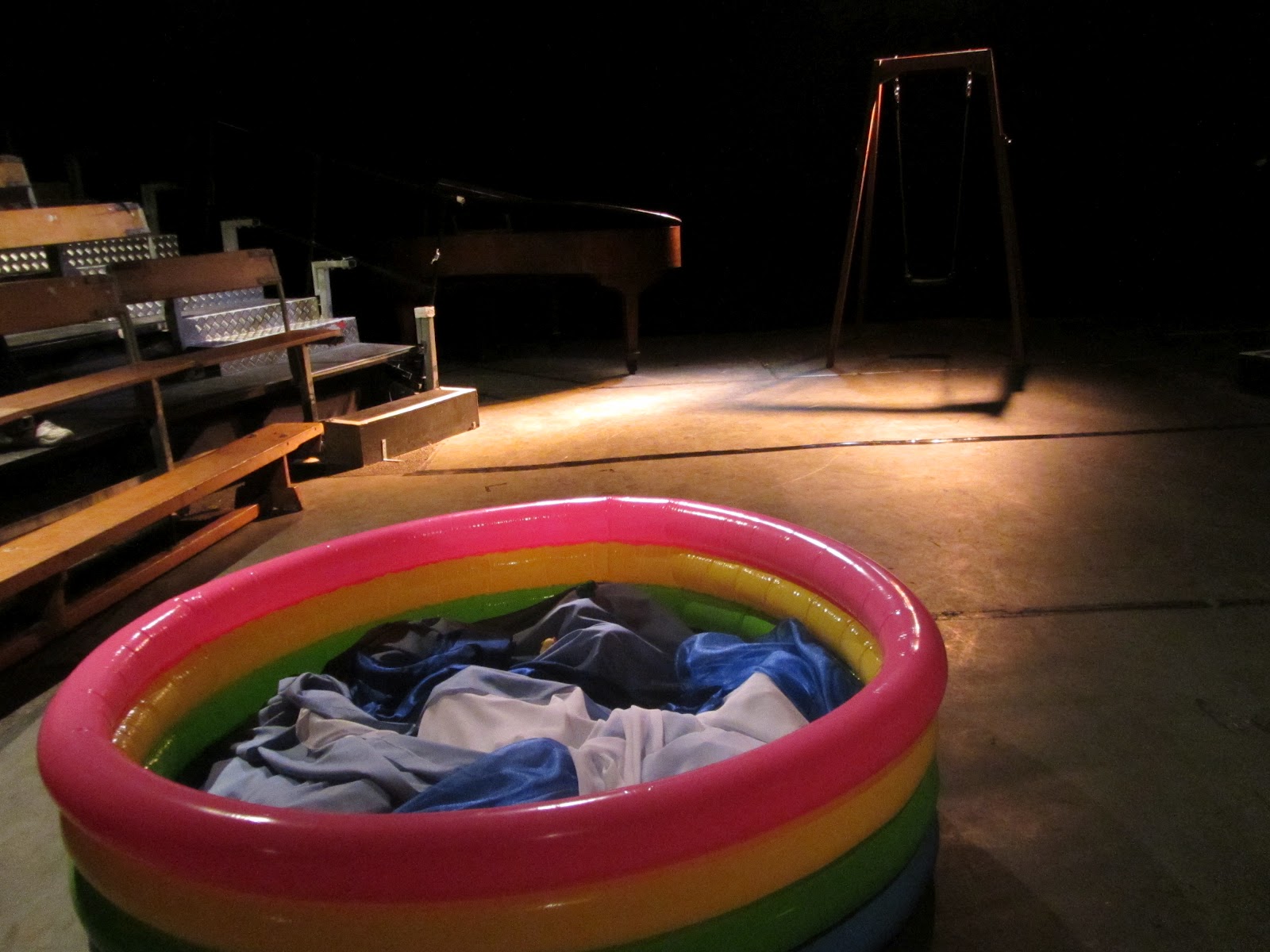
I have not idea what the point of the colourful paddling pool was though.

Susanna’s Secret was written by Ermanno Wolf-Ferrari and first performed in 1909.

It shared the theme of the first opera with a recently married couple going through some difficulties.

In this case the husband suspects the wife of entertaining other men while he is out at his club. The enduring smell of smoke is the clue.

We soon realise, but the husband does not, that the person smoking is his wife.

Returning early the husband finds signs of recent smoking and confronts his wife. She thinks that her smoking has been discovered and confesses, he thinks she is confessing to a lover. An amusing scene follows until the expected happy ending is arrived at.

Again the singing was exquisite. And this time there is some good acting too especially when the wife acts furtively to hide her smoking habit and is helped in this by their manservant, the doctor from the first opera this time playing a silent role as a straight actor.

Both operas were delightful and they worked very well together thanks to the common mood, common theme and common piano accompaniment. Another delightful evening at Grimeborn.

27 August 2012

The Sound of a Voice at Grimeborn

As one festival closed in an opera-heavy Summer another one opened.

The excellent Tete a Tete Opera Festival had just finished at the Riverside when the new Grimeborn festival started at Arcola Theatre on the other side of town. Meanwhile Glyndebourne still had one more show to go for me.

The Grimeborn programme was full of familiar names, like Mozart and Handel, but the intention was to give them a modern spin. We'll see how that goes.

My first visit was to see the UK Premiere of The Sound of a Voice by Philip Glass and David Henry Hwang. Clearly unmissable.

The Sound of a Voice is actually two different plays by Hwang, The Sound of a Voice and The House of Sleeping Beauties, both from 1983. They share themes and work together as a pair. Their union is cemented in a single score, this is typical rhythmic Glass with melodic Japanese overtones, and a shared set.

In the The Sound of a Voice a mysterious traveller seeks shelter at a house occupied by a lone woman. He is reluctant to say where the is going and she is equally reluctant to say anything about herself other than to say that time has no meaning for her except when she has a visitor to measure it by.

He is persuaded to stay a while and mysteries start to unravel such as the fate of the previous visitors and the real purpose of his visit. This all happens slowly and carefully and when the dramatic ending comes we are prepared but still stirred.

It was a simple haunting story brilliantly related by two very good singers. I loved everything about it.

The House of Sleeping Beauties was just as mysterious.

An old man visits a brothel wishing to learn about it rather than to use its services but after a conversation with the madame over a cup of tea he is persuaded to visit one of the girls who, we are told, is asleep.

Something happens, possibly violent, certainly unusual.

He returns several times and we learn more about him and the madame as he does so. He claims to be writing an article on the house she has ways of keeping the police away. Sleep and sleeping potions are mentioned.

Their story also ends dramatically having built to the crescendo steadily and naturally. It is rather like a slow-motion car crash. I loved it too.

There was a rousing reception at the end and it was fully deserved. The four singers were all superb, as was the small orchestra, and the staging maintained the sense of mystery and menace beautifully. This was my kind of opera, in spades.