Showing posts with label barbican. Show all posts

26 May 2025

Hawkwind at Barbican Hall (26 May 25)

I use the "hawkwind" tag on this blog to cover any band that plays Hawkwind songs, either exclusively (e.g. Hoaxwind) or mixed in with their own songs (e.g. Space Ritual), and it is always nice to hear the original band.

Once upon a time, Hawkwind's last gig on a tour would be at Astoria, long gone to make way for Lizzy Line, and since then they have played places like Shepherds Bush Empire and Royal Albert Hall. This was (I believe) their first time at Barbican Hall.

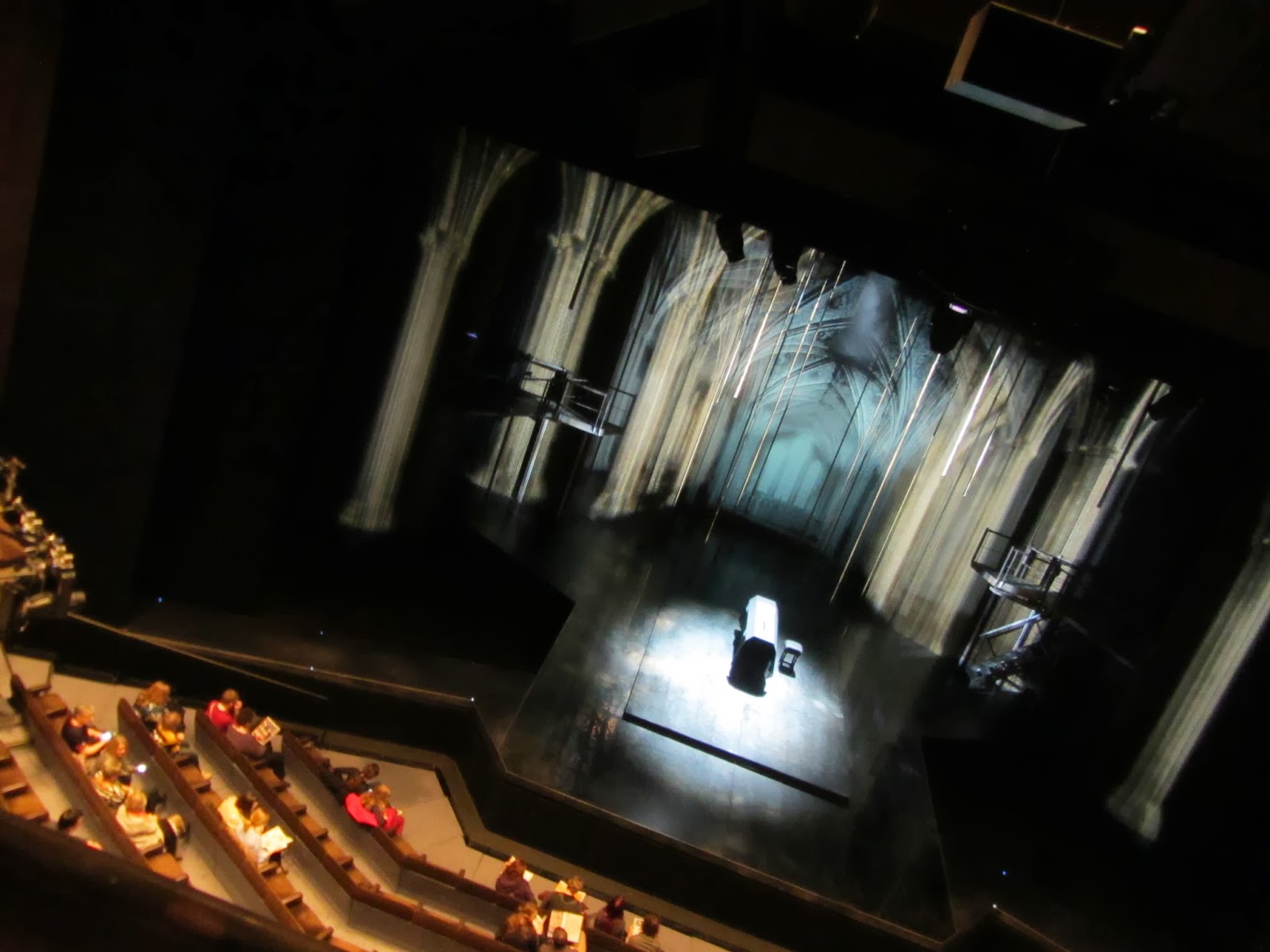
Having paid £55 for a seat at the very top of RAH to see them in 2023 I was a little surprised to pay just £43.5 for seat Circle A24. The view from there was very good as the photo below shows.


We were due to have a support band, and they sounded interesting too, only to have that cancelled due to them breaking down on the motorway on the way there. The fill-in was probably better. Hawkwind had been playing with a musical (!) and they had some of the music on a PC with them. That music sounded, to me, like 1960's cocktail  bar music, the sort of thing that they played in shows like The Saint, only the lyrics were very much Hawkwind. If that sounds strange, well it was. Strange, interesting and lovely. If it ever makes the light of the commercial day then I will buy it.

Hawkwind hit the stage around 8:20pm and rocked solidly for two hours. Unusually, nobody led the band visually and for most of the time all the band members were hidden in darkness behind a continuous light show. They are all on stage in the photo above.

Musically they played a wide selection of songs covering their entire lengthy career in a consistent heavy rock style enriched with keyboards. The emphasis was on "rock" but this was very much "spacerock".

A lot of the songs I knew and several were new to me, presumably from their more recent albums, Familiar or not they all sounded good and they all sounded like Hawkwind. There were some classics (e.g. Psi Power, Assault and Battery, The Golden Void, Spirit of the Age) some unexpected favourites (e.g. Paradox, Steppenwolf) and even some spoken word (e.g. The Awakening).

Of course with so many songs to choose from they had to leave some things out and it is a testament to how strong the setlist was that there was no space for songs like Silver Machine or Brainstorm. It would have been nice to hear them but they were not really missed.

Hawkwind have been going since 1969 and I first saw them live in 1976. It has been a long and happy relationship which I cherish.

28 April 2017

Intense and compelling drama with Obsession at Barbican Theatre

My season of big-hitter dramss continued with Obsession at Barbican Theatre. This time the big-hitter was Jude Law who I had seen on the stage a couple of times before, Anna Christie and Henry V,  and that was plenty enough to make he want to see him perform again.

I was nimble on the booking and was able to capture seat Circle A12 for a respectable £60. Barbican Theatre has an unusual layout (matching the building it sits in) so I was pleased that the first row in the Circle gave me the view that I was hoping for.

The stage was vast and almost empty, the width I expected but the depth was a surprise. Obsession adopted several contemporary theatre tropes, e.g. smoking and nudity, and this included starting the play with people already on the stage. The heroine, if that is the right word, Giovanna was in the kitchen area on the left and was joined by her husband, Giuseppe, who worked on the car engine in the middle.

The lights dimmed, most people stopped talking, and Gino (Jude Law) appeared at the doors at the back of the stage playing a harmonica. He entered the bar/diner looking for food and having eaten but not having any money to pay for it he offered to use his engineering skills to fix the car. He identified the problem quickly, Giuseppe went out to buy that required part leaving Gino and Giovanna behind and that's when the obsession started.


Jude Law was the obvious draw and he was excellent but did not outshine Halina Reijn and Gijs Scholten van Aschat as Giovanna and Giuseppe.

Obsession ran for 110 minutes without a break telling its story with fabulous theatre craft. I loved the pace of the play most of all, there were short scenes of intense passion mixed with long scenes of slow reflection. Here the full width and depth of the stage was used to let the few players make sedate entrances and exists.

The mood was also tempered brilliantly with music. This started with the laconic harmonica playing, featured a full aria from la Traviata, had an automated accordion (it's the odd shaped thing just to the right and behind the kitchen) and included hefty dollops of This Land is Your Land.

Because of the way that Obsession superbly managed the mood of the play (which was the whole point of it) I was reminded of Hedda Gabler and Obsession shared it's final trope with that production with the play moving seamlessly from dramatic ending to curtain call. And a very raucous curtain call it was too.

Oddly, Obsession was probably the big-hitter play that I had the least expectations for and is the probably the one that had the most impact on me. I loved it to bits and then some.

29 April 2015

The Études for Piano by Philip Glass at the Barbican


I am always going to be tempted by a concert of Philip Glass' music whether it is a small opera like The Penal Colony or a large concert piece like Music in Twelve Parts. The Études for Piano fell somewhere in the middle; a happy middle.

I did not know the works at all beforehand though as they were composed by Philip Glass that did not matter. I have a great deal of stuff by him on CD, probably more than for anybody else, except possibly for David Bowie and Neil Young, and I love all of it in all of its forms.

One of my very favourite of these is Solo Piano, because of the simplicity and the purity of the music, so I was even more excited than usual at the prospect of more piano piece.

The clincher, if a clincher was needed, was that Glass would be playing some of the pieces himself.

I had been to the Barbican Hall a few times before, mostly for gigs by the likes of Sparks and Van der Graaf Generator, so I was content to take a seat up in the Balcony. I had been forced, out of desperation, to be up there for a recent Sparks gig and that had worked out
well.

And so I found myself in Balcony seat A33 for £22.50.

I did well to bag that seat quickly as the event sold out. Much like Sparks, Glass is a fringe American act who is surprisingly popular over here.

On the day my planning went a little awry and I went to our Reading office for the day. That was not a problem for getting to the theatre but it did mean that my evening meal was the all too familiar pasty picked up in Reading Station when passing through.

I had been to the Barbican quite a few times before so I knew that I would get confused inside and it took a little exploration to find the box office to collect my ticket and then to find the correct door for the hall. I did not mind that at all as the Barbican is a nice place to wander around and I had plenty of time to do the wandering.

Once I got to my seat I took the usual photo to show the view that I had and, as you can see, it was very good. I was particularly pleased to be able to see the keys which meant that I would also be able to see the hands in motion.

The task of playing the twenty Études for Piano was shared with Maki Namekawa, Timo Andres, Clare Hammond and Vikingur Ólafsson. Musically they sounded similar, as I think they should have done given that they were all playing pieces by the same composer, but there were big differences in the way that they sat (height and distance) and in the way that they moved their arms.

Part of the fun was watching how they each behaved and that included the walk  on and off as well as the playing in the middle. Ólafsson caused some involuntary laughter as he got lost walking off stage the first time.


The concert was split into two halves with ten Études either side of the interval and each pianist playing two piece  in each  half. They playing order was not quite as expected and went Glass (Études 1 and 2), Hammond (3 and 4), Ólafsson (5 and 6), Namekawa (7 and 8), Andres (9 and 10), interval, Hammond (11 and 12), Ólafsson (13 and 14), Andres (15 and 18), Glass (16 and 17) and Namekawa (19 and 20).

I've not said much about the music so far as there is not much that I can say lacking the musical knowledge and terminology to do anything like a forensic analysis. What I can say was that it sounded much like his other solo piano works, and I mean that as a high compliment. It had the familiar, and much loved, structure of subtle changes applied to a rhythmic repetitive base.

It sounded like you expect Philip Glass to sound. This was Minimalism 101 that also managed to be catchy, pretty and was very much appreciated by the packed hall.

20 December 2014

Kimono My Orchestral House by Sparks

Booking tickets for Sparks' orchestral version of Kimono My House at the Barbican had been something of a nightmare and I had to settle for a seat in the Balcony (the very top level). And I was very happy to get that.

Then they announced a second date and things got a lot better.

A week after the first attempt I was back in front of my PC eager to get tickets and this time there was less of a rush. I suspect that the touts had piled in on the first night hoping it was a once off and were reluctant to dive in on a date that they could not be sure would sell out. Whatever the reason the queue was easier and I was able to get a seat in the stalls, F36, for a miserly £30.

Row F is the back row of the front block of stalls that form a truncated triangle before a corridor then the first row that goes right across the theatre. To put it simply, it was a bloody good seat. And it was made even better when the person in front of me failed to turn up so I did not have a head to look around.

It was certainly a far better seat than the one Bryan Ferry had two rows behind me.


The show was almost exactly the same as the night before, and I was perfectly happy with that. Ron and Russell took up their stations at either side of the stage with the full orchestra behind them. I had a brilliant view of Ron all the time and could see Russell bouncing behind his music stand.

The music was clearer than it had been in the Balcony (there's a reason why Stalls seats are more expensive) and that had been quite good enough. On the second night I could hear the piano better and being closer made physical spread of the sound more distinctive.


The mountain does not go to Mohammed and Ron does not go to Russell so when there was a duet it was Russell who moved and that meant him coming across to my side of the stage. That allowed me to take a few photos like this one.

As always, taking photos was a balancing act between trying to capture a few key memories of the evening and not being distracted in the act of taking them to miss the music. I took about twenty altogether in just under two hours which seemed about right to me though around me people took between zero and a quadrillion pictures. Each to their own.


One slight change from the first night was the Ron Dance. On the Friday Ron had loosened his tie and stepped willingly in to the dance but on the Saturday he was far more reluctant and sat on the edge of the stage for a while as the orchestra maintained a holding pattern. But Ron was not going to let his greatest fans down and we got the arm and leg swinging performance that we were cheering for.

Ron was 69 and should either have known better or have retired a while ago. I am glad that he did neither.


Sparks got a thunderous reception at the end and I was standing up and whooping with everybody else (well, almost everybody, Bryan Ferry remained seated). Russell and Ron gave their thanks back and reminded us that their career owed a lot to England; quirky music is more our thing than America's.

They also mentioned a new album and I can only hope that they will be back in London before too long for some more concerts to promote it. They took a big gamble in bringing their show for two nights at the 1,943 seater Barbican Hall and it paid off with two sold out concerts. There is a big fan base here and we would like to see more of them.

Orchestral Kimono My House was a truly brilliant concert in every aspect (did I mention the lighting?) and was not diminished in the least by having seen it the previous evening.

19 December 2014

Orchestral Manoeuvres by Sparks

Sparks doing an orchestral version of Kimono My House to celebrate its fortieth birthday (!) was something that I was clearly going to be very keen to see. Sadly, but not unexpectedly, many other people thought the same thing and the Barbican website struggled to meet demand.

Having volunteered to get the tickets I sat busily, and increasingly desperately, refreshing the screen and trying to book seats only to find them gone when I moved to the next stage of the checkout. I thought that I would get no tickets at all but in a final act of desperation I went for three separate tickets in the Balcony, the top level of three, and managed to get them. I was hoping for better but going was far far better than not going so I was happy with that.

On the day there were a few spare seats in the Balcony, I hope that they had been bought by touts who had been unable to resell them, and I was able to swap B25 for A22 and a pretty good view of the stage.


Kimono My House was even better than I expected.

This was not Kimono My House performed by an orchestra (like Mantovani might have done) but a full orchestration of Kimono My House. The songs were familiar but noticeably different. Perhaps the most obvious example of this was the dark grinding coda given to Up Here In Heaven Without You.

Equator was my favourite track on the album and it was my favourite song on this night. It lent itself to extended play and that is what Sparks did, closing the first half of the set with the audience joyfully joining in with the chorus.

The second half was a greatest hits, many of which also featured in the Two Hands, One Mouth tours and it was nice to hear songs that had first been stripped to the bone then given full orchestral flesh. When Do I Get To Sing My Way was a particular favourite of mine (it always is) and it was good to here other regulars like Number One Song In Heaven and The Rhythm Thief get the orchestral treatment too. Let The Monkey Drive was a welcome surprise.

Constrained by the space and the demands of the music, there were fewer theatrics that usual though we did still get the Ron dance and Russell's unusual trousers (where does he buy them?). This show was all about the music and the music was brilliant. There was a long standing ovation at the end with Glyndebourne levels of applause.

Kimono My House may have been a risk, orchestrating a forty year old album for a relatively obscure band and putting it on in a large hall, but it was an undoubted triumph. So much so that they planned to do it all again the next day. And I'll be there for that too.

13 December 2014

A day full of Shakespeare with Henry IV Parts I and II at the Barbican


I am definitely not seeing Shakespeare's history plays in quite the right order and it does not help that I did not learn my Kings and Queens at school well enough to put the plays i context.

At least the previous history play that I saw was Richard II, also a RSC production at the Barbican and I did see Henry IV Parts I and II in the right order too. It is just that in recent years I have also seen Richard III and Henry V and the later gave me a good clue as to how these would end.

It was the success of Richard II earlier in the year that had brought the RSC back for the sequels. The Barbican is not the easiest place for me to get to so the best way to see both shows was to do so on the same day. That was a staggering five and a half hours of Shakespeare and a total of around ten hours at the Barbican.

Henry IV Part I started at 1:30pm so I got there about an hour before hand to collect my tickets, eat and drink something and to settle in ready for the long session.

Neither performance was completely sold out and so, as has happened before there, the Barbican offered a free upgrade for both shows to seats in the stalls. I had deliberately chose the front row of the Upper Circle because of the price and the certainty of an uninterrupted view (I have a pathological fear of tall people in theatres) but the deal was that I could use my original tickets if I did not like the upgrade. That seemed very fair to me.

Henry IV Part I started where Richard II ended and we saw a ghost of the dead king at Henry's coronation to remind us of that.

Henry IV's aim was to unite the kingdom under his good rule but his plan to be nice to everybody quickly fell apart as old grudges led to new rebellions.

Meanwhile his son, who was destined to become Henry V, was living it up with wine, women and song. He was helped in this by Sir John Falstaff.

That led to two parallel stories that ran across the two plays, Henry IV quelling revolts and Sir John Falstaff taking every advantage he could with people. Over the five hours Henry V moved from the Sir John Falstaff camp to his father's.

The Sir John Falstaff story was the funnier and with Antony Sher staring in the role it was the main story too. This was a history play with just a little history but a lot of comedy.

The rebellions story was good too but a little predictable as I knew how it ended. The detail was completely new to me though as I knew nothing of the waring factions, or of the main players in them, beforehand.

I cannot recall where in the plots Part I ended and Part II started and seeing the two together proved to be a good idea.

I had a couple of hours free between the plays and this time quickly evaporated in a walk around the Barbican, part exploration and part exercise, and in a meal. I had though of visiting one of the exhibitions or of reading some of the comics on my iPad but I ran out of time. Relaxing can be very time consuming.

Henry IV Parts I and II are not Shakespeare's best plays (in my opinion) but they still managed to enthral me for five and a half hours and this production by the RSC did everything right without being too fussy.

It was a highly entertaining day and while I was worried that the two plays might be a little too long and the Barbican unable to keep me comfortable all day both fears were so unfounded that I would have been quite happy if the plays had been longer and I had had more time to spend at the Barbican.

04 July 2014

Neil Gaiman narrates The Truth is a Cave in the Black Mountains

The last time that I saw Neil Gaiman in person in London it was in the holding room while waiting to see a recording of The Now Show and I was the only person in the room who recognised him.

That was a few years ago and things like American Gods have happened since then and now to see Neil I had to fork out £50 for a decent seat in the Circle (B27) at the Barbican Hall. This is the largest space at the Barbican Centre and it takes almost 2,000 people. It looked sold out to me.

I was not quite sure what to expect, though there is a clue in the poster, because the Barbican had listed it under their music section and one of the artists mentioned was FourPlay String Quartet.

It was the quartet who opened the evening and they started it with some tuning-up sort of noises that quickly became the Dr Who theme. Cue much applause. They played some of their own songs too and they did a pretty good job of entertaining us for twenty minutes or so.

Then Neil came on. Cue much more applause.

The first half of the show was a bit rambolic and felt almost as if it was made up on the spot, some of it probably was. Neil told a few tales, some that he had written and some about writing them. The substantial material came from his 2013 collection A Calendar of Tales, a set of very short stories commissioned by BlackBerry and each inspired by a tweet sent to Neil in response to his request for an idea or image for each month.

I have read A Calendar of Tales but it was nice to hear Neil read a few of them.

And that was the first half. In about forty five minutes we were back out looking for beers having had a fairly thin feast. I was somewhat disappointed but that was only because I did not know what was coming next.

The second half was filled with the tale The Truth is a Cave in the Black Mountains and some tales about the making of it.

The tale had been originally commissioned for an event at the Sydney Opera House and had been told a few times since then. The more that it was told the more pictures there were from Eddie Campbell to illustrate it. It developed from an illustrated book to a picture book.

It was a long rambling tale firmly in the Neil Gaiman tradition of folklore and magic with little things planted along the way to reappear later when least expected. It was consummate storytelling from somebody who has mastered the art.

The tale was significantly enriched by Neil's telling of it. He usually records his own audiobooks for this reason and I have his reading of Neverwhere (I also have the book and the DVD of the TV series). It was also significantly enriched by Eddie Campbell's many illustrations.

I did not check my watch but the story lasted around an hour. Then we had some chatting about it with Eddie joining Neil on stage (in a kilt). Neil generously explained that he had nicked some of the ideas from a Scottish writer that nobody else had ever heard of while staying in his Skye retreat.

The evening ended as rambolically as it had started but that did not matter. The evening was all about The Truth is a Cave in the Black Mountains and that was a pretty tale prettily told.

10 May 2014

The Testament of Mary at the Barbican was engagingly weird

The Testament of Mary was always going to be an unusual theatrical experience, and so it proved to be.

It told the story of Jesus from the perspective of his mother who is far more concerned about his pain and her loss than any thoughts on his possible divinity.

A Biblical story would not normally get my attention but this was a one woman show and that one woman was Fiona Shaw. She had been magnificent in The Rime of the Ancient Mariner at The Old Vic Tunnels in 2013 and that was what made me want to see this.

The Barbican Theatre is nothing like as intimate as the (sadly missed) Old Vic Tunnels were I was able to see Fiona from the comfort of wooden box on the stage so I avoided a stalls seat and went for the usual front row of the Upper Circle where seat A25 (£25) gave me a good central view of the whole stage.

The weirdness started early.

The audience was allowed to stroll on to the stage to examine the set. Then Fiona, dressed as the Virgin Mary, was dropped David Blaine-like in to a glass box and sat motionless. Then the box was lifted out of the way and Fiona was left there among the audience. After a while the audience were asked to leave and some were given candles as they did so. Fiona ran off stage.

The show started for real with Fiona returning to the stage in normal casual clothes.

For the next eighty minutes she gave us a mother's view of a son who got involved with some strange men and then came to a brutal end. It was a passionate and human tale with some touches of humour.

Fiona moved around the stage energetically and sometimes a little violently, e.g. throwing chairs across the room. A couple of times I thought that the violence was stronger than the words justified but it was only a couple of times and did not seriously detract from the story.

The most shocking scene was when Fiona stripped off to drench herself in water. Whether I thought of it as Mary or Fiona sitting naked on the stage it was still a shock and I am not sure what purpose it served. The baptism symbolism was obvious and she could have done that in a costume.

Despite the weirdness, the strength of the story won through and The Testament of Mary was an engaging and gripping piece of theatre.

Fantastic Architectural Tour of the Barbican

I have been to the Barbican many times and it is one of the few places in London that I go to whenever I can just to sample its architectural beauty.

The only excuse that I have to go there these days is the Barbican Centre, and that was why I was there on this day, but back in 2000 I was working for a consultancy just south of Smithfield Market and had a project in Finsbury Square and I often walked between the two offices by going through the Barbican. I took various routes through and got to learn the walkways reasonably well, but not well enough to stop me from getting lost occasionally.

The Barbican Centre runs Architecture Tours and I booked myself on one for an afternoon before an evening performance at the theatre there.

We started by going up the steps from the Centre and looking back on the large square there while our guide started to tell us about the history of the site. One of my misconceptions that was quickly cleared was that while this was build by the Local Authority, the City of London, it was never intended to be Local Authority (Council) Housing in the normal sense. These were always meant to be good houses for city workers.


We were soon walking over the roof of the concert hall. I had done that unknowingly many times before.

It was interesting to hear how the design of the development had to accommodate the specific needs of the Barbican Centre, particularly the theatre with its large fly tower.

In the same area we were shown where a cinema had been replaced with flats and the two large fire-escapes had been left in place and transformed in to gigantic plant-holders.

We also learned that a large part of the Barbican is unoccupied at any point. Like most of London, it has been blighted by buy-to-let with many short-term tenancies and a fairly high turnover.

From the Centre we moved west towards Barbican Underground Station which is linked to the Barbican by a bridge that many visitors fail to notice so they end up walking to the Centre through the ugly underpass shared with traffic rather than along the peaceful walkways.

Moving south and skirting the Museum of London we saw the only houses in the development and the garden square that they back on to.

At this point the heavens opened for a while and we were grateful that the walkways in that section of the Barbican were covered.

The south-west corner of the Barbican being furthest away from the arts centre is the least explored and is also the least interesting.

There were some signs of life in that quarter with a hard sports pitch, tennis courts and a playground. The Barbican is composed of a series of squares and what is in those squares is often more interesting that the iconic flats that surround them.

This corner of the Barbican is connected to the outside world by bridges as well as staircases down to street level. The thought was that eventually many paths in Central London would be moved up a level to leave the streets to cars but this never happened so the walkways inside the Barbican only have a few connections.

The access to these can be hard to find and you have to know where to look. Often you'll climb a bleak staircase and ask yourself if this actually leads anywhere before it opens up to reveal a crossing over the road.


Moving east along the south side of the development we came to its most dramatic feature, the central lake with a block of flats and a walkway crossing it. When we got there the rain had been replaced by sunshine and the tall pillars made strong shadows across the water.

Looking west from there gave us another view of the central square which we had looked at earlier from the far side.


The fountains in the lake seemed to be enjoying the returning sun as much as we were.

Looking west and the water was quieter. It can enter the lake dramatically and noisily from the chute at the far end but it was behaving itself this time.

There is a lot of greenery in the Barbican's many squares and there is plenty in the lake too. I especially like the circular planters in the bottom right corner. Circles and half circles are all over the Barbican and in this picture those in the lake echo those on the roofs.

There are some surprising things in the Barbican, it is not just an arts centre surrounded by flats.

It was intended to be a community so there is a school, the City of London School for Girls. The original plan was to have a girls school and a boys school for residents but there is just a girls school and it is private so it pulls in pupils from a wide area, not just from the Barbican.


Also hiding in the centre of the Barbican are St Giles' Cripplegate church and some remnants of the old London Wall. It was somewhat disappointing to hear the Cripplegate had nothing to do with cripples, which is what I had believed.

It is a sign of the Barbican's success that it can accommodate structures like these alongside its concrete towers.

I went on the tour as a Barbican fan and left it a much better informed fan. We learned a great deal on our ninety minute journey and I loved every minute of it.

04 January 2014

Richard II at the Barbican

Richard II at the Barbican was always going to be a special event with David Tennant in the title role, and so it proved to be.

I had seen Tennant in Shakespeare before, in the much lighter Much Ado About Nothing, and I knew that he had done a lot of work with the RSC so I had high hopes for his acting.

Not that this was by any means a production that relied solely on its star, unlike the limp versions by Michael Grandage that I witnessed recently (A Midsummer Night's Dream and Henry V).

This was apparent from the beginning from my lofty seat in the Upper Circle with the stage impressively set as a Gothic cathedral.

And the opening was brilliant too. The funeral we were about to witness was introduced with period music from three female singers and a small group of musicians performing from the two raised platforms on each side of the stage. The opening tune piece lasted for a few minutes and music was recurring theme in the performance.

I had not seen Richard II before and the brief research that I did on the historical characters was to read the introduction to the article on Wikipedia on my phone just before it started. I learnt that he became king at the age of 10 and I assumed that the story started with the death of his predecessor, so I was waiting for a young king to appear.

I was wrong.

This was the funeral of a Duke and Richard II was a grown man by then.

It was not just the age error that made me not recognise Tennant at first, it was also his appearance. The poster shows Tennant in modern dress with his familiar short brown and spiky hair but he played the role in what looked like a dress and had long blond hair that reached well below his shoulders.

Shakespeare's Richard II is a complex character who changes his mood from frivolity to seriousness, from despair to determination. I think that he is meant to be a baddie but it was hard not to feel sympathetic towards him, perhaps that was because of the way that Tennant played him.

While Henry V was all about fighting the French, Richard II fought most of his battles against English rebels, with a quick detour to Ireland, Schemes are hatched to depose Richard which he is powerless to fight as more and more people side with his cousin Bolingbroke. One of the nice things about not knowing much history is that the stories in historical plays are not spoiled.

David Tennant was superb but did not steal the show because there was so much good stuff going on around him. So much so that I'll probably go and see the sequel when it comes to the Barbican later this year.

30 June 2013

Van der Graaf Generator at the Barbican

I guess that it says something about Van der Graaf Generator that they now play plush seated venues like the Barbican and it says more about their fans that we will happily go there to see them. This is a far cry from the make-shift stage I first saw them perform on at Southampton University in 1975 (October 15).

Van der Graaf Generator do not tour much these days and it was two years since I last saw them play. That was also at the Barbican and I also had a front-row seat in the circle then but this time it was because I was in quick enough to get the seat I wanted rather than having to rely on returns.

The set-list was fairly different but the sound and the experience were the same.


Now a three-piece, VDGG created an enthralling wall of sound which the sound system and acoustics of the Barbican Hall did full justice to.

As before, the set-list was mostly new to me and as before that did not matter one jot, it all sounded like VDGG should sound; glorious, complex and rhythmic.

There were two songs that were instantly recognisable, Man-Erg, which seems to be their most played live song, and the pre-announced classic A Plague of Lighthouse Keepers that was one side of 1971's Pawn Hearts.

VDGG are still evolving and still doing miraculous things live. I just wish that they did them more often.

18 April 2013

Sunken Garden by ENO at The Barbican (spectacular)

This was a complex and confusing evening in many respects.

Firstly, I was there almost under pretext. The ENO Undressed scheme is meant to encourage new people to the opera but it is such a good deal that I applied for tickets and was very pleased to get two of the two hundred on offer for this opera.

The appeal was not so much the best seats for only £25, appealing though that was, but rather it was the extras that were thrown in like the pre-performance talk and the after party with members of the cast. These are things that I would pay extra for so getting them and a cheaper ticket was a bizarre bonus.

This was an ENO opera but staged at the Barbican, and not the Coliseum, as part of their out reach programme where they take the ENO brand to different locations to encourage people to follow them back to their home. 

The publicity for the opera focused very much on the mixed media used, including 2D and 3D film, recorded singing and electronic instruments alongside a normal orchestra.

The (short) pre-performance talk, by the composer Michel van der Aa, concentrated on the libretto novelist David Mitchell. This told us that the story starts in the real world and then moves in to a fantastic realm, the Sunken Garden.

Sunken Garden is the story of a struggling artist who is trying to make a film about somebody who disappeared. A rich benefactor pays him to continue his work and we see it grow.

Part of the performance is talking heads film clips; no music, just words. At times it is hard to think of this as an opera.

A big step is made when a second disappearance is uncovered, and that eventually lead him to the Sunken Garden.

And that is when we had to put our 3D glasses on. The effect was mind-blowing, even though I knew that it was coming. There was an audible gasp of surprise and delight from the audience.

The 3D film was shot in the Eden Centre and just moving around the plants in 3D was spectacularly effective. This had more of an impact on me than Avatar did.


We find the missing people in the Sunken Garden, but only on film.

There are some special effects to add to the already impressive mix, such as when water from the pond in the garden is splashed across the stage (apparently).


Amidst all this weirdness I found the music surprisingly normal. The main themes were familiar orchestral sounds, they brought Leonard Bernstein to mind, and these were enriched with fanciful noises and effects, not quite Hawkwind but you get the idea.

The Sunken Garden assaults the senses for 100 minutes (with no interval) giving so much to watch, listen to and to try and understand. It's hard work and all the more rewarding for being so. The understanding was the hardest part and even having read the synopsis afterwards I am still not sure about everything that happened, but that only makes me more interested in seeing is again.

01 February 2013

Tatyana by Companion de Dança Deborah Colker at the Barbican

Tatyana is a dance by Companion de Dança Deborah Colker and I was taken to the Barbican to see it by some friends who share my wish to see more dance.

I do not go to the Barbican Theatre (the smaller of the two performance spaces) often enough to get used to it; in particular the way that there are separate entrances to each row in the circle and the doors to these all close automatically together when the show is about to start.

This is the view that I had from my seat looking across the stalls to the other wing of the circle. There are a further two levels above that but these are places that I have yet to explore.

Tatyana is based on Pushkin's novel Eugene Onegin, which was of no use to me as I have not read the book, seen the opera or the ballet set to the same Tchaikovsky music. Knowing the story may have helped a little to make sense of what followed though I was happy to focus on just the movement and music and not worry too much about what it was meant to be about.

As seems to be the case these days, the dance was in two very different half.

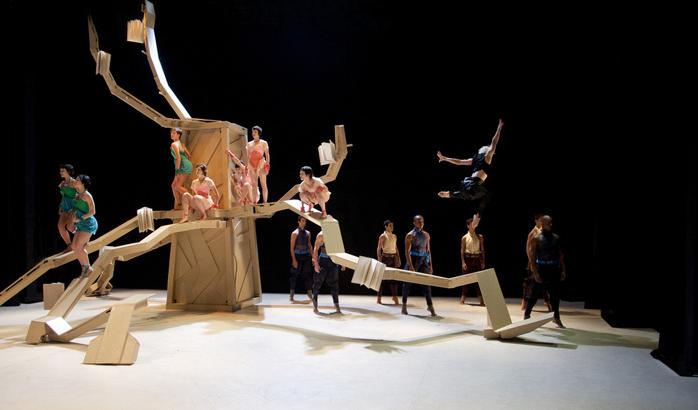
In the first half the stage had what seemed to be a tree on it with branches or roots running to the ground. These could rotate to create different set-ups.

The dancing that accompanied it was energetic and gymnastic with lots of leaping, climbing and swinging. It was all very dramatic and impressive but not actually that pretty. For example, the ladies' limbs had more prominent muscles than usual and they did not flow between poses with the grace that I like to see.

The second half was a different and a better story. The tree was gone and the dancing was on the flat stage. That alone allowed more elegance in to the movements. There were also some slow passages with just one of two dances. The best of these dances came from Deborah Colker herself who in one short scene proved that she was the better of all the dancers in the company.

If the first half was a little disappointing then the second half recovered the situation and the evening was at least satisfactory and at times was quite a lot of fun.

26 October 2012

Sparks: Two Hands, One Mouth at the Barbican

I was lucky enough to see the try-out for Two Hands, One Mouth back in June and I leapt at the chance to see it again when it returned to London, this time as part of an European tour.


This time it was the plush seated main hall at the Barbican rather than the cramped standing-only Bush Hall.

I leapt quickly enough to get seats in the third row of the central block.

Sparks are not really the sort of band you want to sit and listen too as their poppy bouncy music commands you to move. On the other hand you get to see the band clearly without some 6ft 6in youth standing in front of you. It is a good compromise; dance to the band at Bush Hall then see them at the Barbican.

The seating was not the only difference that the Barbican made. The other big difference was the sound system that boomed and echoed across the hall. The low base notes ripped through me at times threatening to make a mess of my innards. 

The shows was much as it was when I first saw it, which was expected and was good.

They played a lot of my favourite songs, such as Metaphor, My Baby's Taking Me Home, Suburban Homeboy and When Do I Get to Sing My Way.

Perhaps not surprisingly, the biggest cheer came for This Town Ain't Big Enough For Both Of Us, which I still love but not as much as the later longer and more repetitive songs.

Sparks played a few tricks on us and three of the songs had false endings. Though, to be fair, in Suburban Homeboy they are not really endings but breaks after which the song resumes at a faster pace.

Russell did a lot of talking to the crowd, and Ron did some too. They said how much London means to them and gave us thanks for giving them their big break in the 70s. Unexpected but welcome.

More expected was the Ron dance though they kept us waiting. We all knew that Russell was at the keyboard ready to take over the one-finger duty releasing Ron. Most unexpected was Ron taking his shirt off and going in to the audience. A few middle aged women got the treat of their lives.

The show ended fittingly and well with the song composed just for this tour, Two Hands, One Mouth.

This was Sparks at their consummate best. They selected carefully from their extensive back-catalogue choosing songs with different styles that work well together and they magicked this in to performance that delighted the audience. The smile stayed on my face for a long time.

10 May 2012

Einstein on the Beach at the Barbican

There is a real risk that this review will fall off a ledge of extreme adjectives as it about as special as an event can get.

All Philip Glass operas are special, and all too rarely performed, and Einstein on the Beach is extra special as it runs non-stop for almost five hours. This is quite a barrier for performers and audience alike so it is an even rarer beast than other Glass operas.

Hence this was the UK premier and a lot of the publicity beforehand focussed on the endurance aspects. Interviewed on Radio 4, Philip Glass said that it was OK to fall asleep during the performance as when you wake up it will still be on.

Einstein is also difficult to classify and while it is generally classified as an opera this is only true as far as it is a staged performance of classical music that has singers. The problem with calling it an opera comes with the lack of a story, the lack of traditional songs and the heavy reliance of visual imagery.

The safe reference point is the music. This is Glass at his repetitive best with the extended performance allowing the main sections to expand in to new spaces.

The thing about repetition is the more repeats that there are the greater the impact.

The repetition spreads out from the music to define the performance.

The libretto has repetition at all levels. Words and phrases are repeated within a scene and themes repeat across scenes. So we have the famous repeating of numbers for long periods and also references to things like Mr Bojangles at several points.

In my favourite scene, the verse "I was in this prematurely air-conditioned supermarket and there were all these aisles and there were these bathing caps that you could buy that had these kind of Fourth-of-July plumes on them that were red and yellow and blue, and I wasn't tempted to buy one, but I was reminded of the fact that I had been avoiding the beach." was repeated many times.

Similarly, the visual repetition came through repeated movements within a scene and with repeated images across scenes. In the first main scene one of the performers walked diagonally back and forth across the stage with slight variations in line and head movement etc.

Repeated images included the clothes (white shirt and grey trousers), trains and metal furniture.

The two dance scenes also mode use of repetitive patterns. In the first individual dancers crossed the stage from one side to the other doing a loop along the way, and in the second they danced as a group repeating shapes.

Einstein on the Beach is not the easiest music to listen to, I'm fairly certain that I've never managed to play it all the way through, but that is because the music tells only part of the story.

When you add the staging it becomes an event that glues you to your chair in awe of the artistic feast laid before you.

The combination of the music and the movement was enthralling, thrilling, captivating and spell-binding and very few people took advantage to come-and-go during the performance.

Five hours may sound like a test of endurance but it flew past and far too soon we were all cheering and clapping loudly.

The raucous applause became even louder when Philip Glass himself joined the cast on stage to take a much deserved bow and to bring this incredibly special event to a close.

04 April 2011

Van der Graaf Generator at the Barbican

I first saw Van der Graaf Generator live on 15 October 1975 at Southampton University just after I started there as an undergraduate. That's over 35 years ago!

My lasting memories of the gig are of Dave Jackson playing two saxophones at the same time and standing through the concert when almost everybody sat down. Somehow the music did not stick and I did not become a fan.

I renewed my interest in VDGG when working in Prague in 1992/93. There the large flat with a good stereo system, free weekends, local bootlegs and a ludicrously generous expenses policy allowed me to experiment with lots of CDs of bands that I knew that I probably ought to like.

I took the easy way in and treated myself to the compilation albums First Generation and Second Generation. There's plenty of good stuff in there and over the next few years I picked up most of their early albums.

I gradually became enough of a fan to see them live again on 8 July 2005 (the day after 7/7). There was a new album out then to promote, Present, but there was lots of old stuff in the set list too. And they were still a four-piece at the time.

Six years later and some fortuitous circumstances brought me to the Barbican to see them again.

I learnt about the gig late and then dallied a bit before deciding that I really did want to go but when I made the jump some returned tickets meant a seat in the middle of the front-row of the circle was available. And it was quickly mine.

I like the main theatre at the Barbican as the acoustics are what you would expect from a concert hall, the seats are comfortable and the pitch means that you've always got a good view. The Victorian theatres that plague London can claim none of that.

VDGG hit the stage promptly and strongly at 8pm. Now down to a three-piece they made far more noise that they had any right too. And glorious noise it was too.

Most of the songs, understandably, came from their most recent album, A Grounding in Numbers, with a smattering from their previous one, Trisector. New songs but familiar sounds.

These driving and pulsing sounds are generated by Guy Evans at the back doing all sorts of things with drums, Hugh Banton on the right conjuring with keyboards and, on the left, Peter Hammill on electric piano, guitars and outrageous vocals. How does somebody in their sixties get to have such a powerful and distinctive voice?

The new songs, just like old ones, are complex tapestries of sounds that move unexpectedly just as you think you've got the hang of them. It's this continual change and invention that makes them interesting and compelling.

Just before the end we did get one old song that I recognised, scorched Earth from their 1975 Godbluff album. I believe they've played it at each of the three concerts that I've been to.

The only disappointing thing about a truly excellent performance was the duration, at little over an hour and a half it was all over far too quickly. But it would be churlish to moan about that and it was a happy bouncy crowd that streamed in to the vast reception areas of the Barbican.

VDGG do not play that many gigs but next time that they do I'll try a lot harder to get tickets.

16 November 2008

Romeo and Juliet at the Barbican

My plan to take advantage of the many cultural delights that London has to offer is coming on rather well and reached a high point recently with a visit to the Barbican Centre to see the ballet Romeo and Juliet.

The Barbican is one of London's architectural marvels, combining high-density housing, a school and the arts centre with car-free walkways, interesting open spaces that feature a lot of water and quiet places to sit and enjoy the plants.

The Barbican is a joy to walk through and there is nowhere else in London quite like it.

The proposal for the Barbican was first put in 1955 and it finally opened in 1982. This means that it has all the modern facilities that you would expect from an arts centre.

It has a main theatre, other smaller theatres that are normally used for films, a gallery, lots of friendly communal spaces and a number of bars and restaurants.

And, unlike the older theatres that predominate in London, it is designed for today's people so the seats have plenty of leg room and you can easily see over the heads of the people in the row in front of you.

I had seen the ballet Romeo and Juliet before, something like twenty years ago, but I was attracted to see it again because this version was by choreographer Mark Morris.

I first came across Mark Morris' work on the South Bank Show and enjoyed his angular approach to dance that makes as much use of the shapes that the dancers make as it does of their movement.

I next came across Mark Morris when he did the choreography for the dance scene at the end of Mozart's Idomeneo for a production that I saw at Glyndebourne in 2003. The dancing there delighted me greatly.

Incidentally, that performance was rather very special as it was produced by l'enfant terrible of opera, Peter Sellars, and the orchestra was conducted by Sir Simon Rattle.

This new production of Romeo and Juliet featured the original Prokofiev score and his original happy ending. But the story is just a frame to hang the music and dance on to and it plays a minor role in this production.

The simple staging allowed the action to flow from grand hall, to bedroom, to town square, to balcony to priory, etc. without intruding on the dancing.

While there are clearly two main roles played by the two main dancers, what stood out for me was the intricate ensemble dancing which made big shapes, mostly squares, and had action all over the stage.

I particularly enjoyed the wild aerial arm movements made by the crowd as they followed the prince through Verona.

The touching and believable relationship between Romeo and Juliet contrasted wonderfully with the ensemble dancing and gave us scenes of relative calm (fewer dancers and less violent movement) but higher passion.

The various components of the evening came together majestically to make this one of the most delightful shows that I have ever seen. It was just fantastic.